How Professional Laundry Services Prevent Woollen Clothes from Shrinking
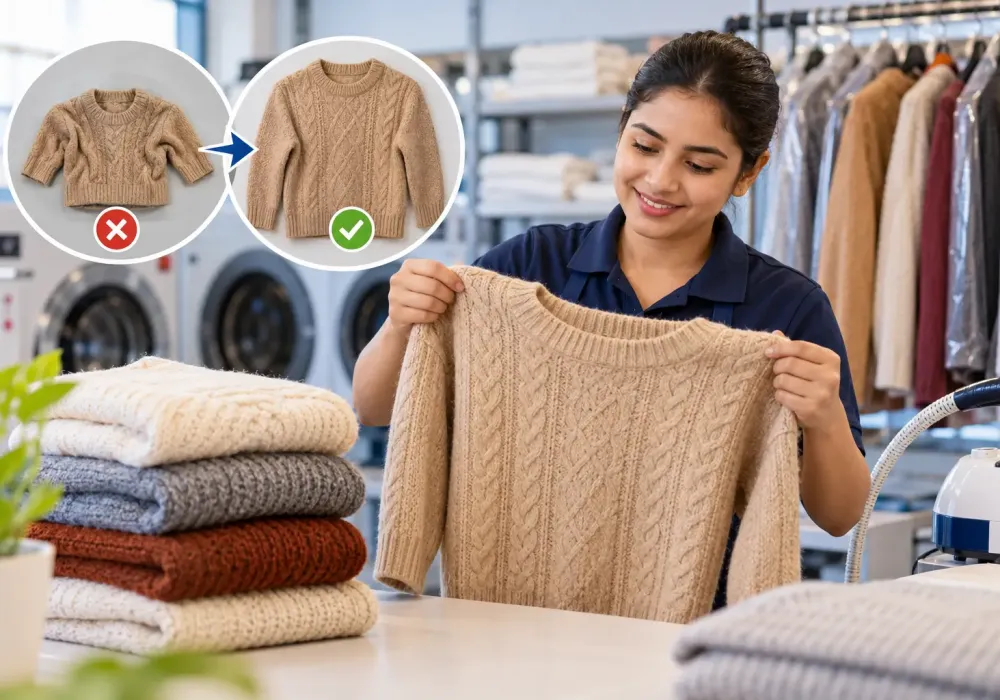
Woollen clothes are a winter wardrobe essential. From cosy sweaters and cardigans to woollen coats and cashmere shawls, these garments provide warmth and comfort during colder months. However, one common problem many people face is woollen clothes shrinking after washing.
Have you ever washed your favourite wool jumper only to find it smaller, tighter or misshapen afterwards? This often happens when heat, friction or an unsuitable cleaning method affects the wool fibres. Once wool shrinks significantly, restoring its original size can be difficult.
Knowing how to prevent woollen clothes from shrinking can help you protect your favourite garments and make them last longer. While careful home maintenance can help, some woollens need specialist attention because of their fabric, construction or care instructions.
At BandBox Laundry, we understand that different garments require different cleaning methods. In this guide, we explain why woollen clothes shrink, common washing mistakes to avoid, and how professional laundry services can help protect delicate wool garments.
Why Do Woollen Clothes Shrink in the First Place?
Wool fibres have a natural structure that makes them sensitive to certain combinations of heat, moisture and movement. When you expose wool to unsuitable washing conditions, the fibres can interlock and become more compact. This process, known as felting, can cause the garment to shrink and lose its original shape.
Heat and Hot Water Damage
High temperatures can contribute to wool shrinkage, particularly when combined with vigorous washing or sudden temperature changes. Hot water is not automatically harmful to every wool garment, but unsuitable temperatures can increase the risk of damage.
To protect your woollens:
- Check the care label before washing.
- Use the recommended water temperature.
- Avoid sudden changes between hot and cold water.
- Never assume every wool jumper can tolerate the same washing method.
Agitation and Friction in Washing Machines
A regular washing machine cycle can create considerable movement and friction. This can cause wool fibres to interlock, leading to felting, shrinkage and changes in texture.
Some wool garments are suitable for a specific wool or delicate cycle, but others require handwashing or professional dry cleaning. Always follow the manufacturer's instructions rather than choosing a washing programme based on convenience alone.
Harsh Detergents and Wrong pH Levels
Wool is a protein-based natural fibre, so unsuitable cleaning products can affect its texture and condition. Strong detergents or products designed for general laundry may not be appropriate for delicate wool garments.
Choose a wool-safe detergent only when the care label permits washing. Avoid experimenting with household cleaning products, as the wrong formulation may weaken fibres, affect colours or leave residue behind.
Common Mistakes People Make When Washing Woollens at Home
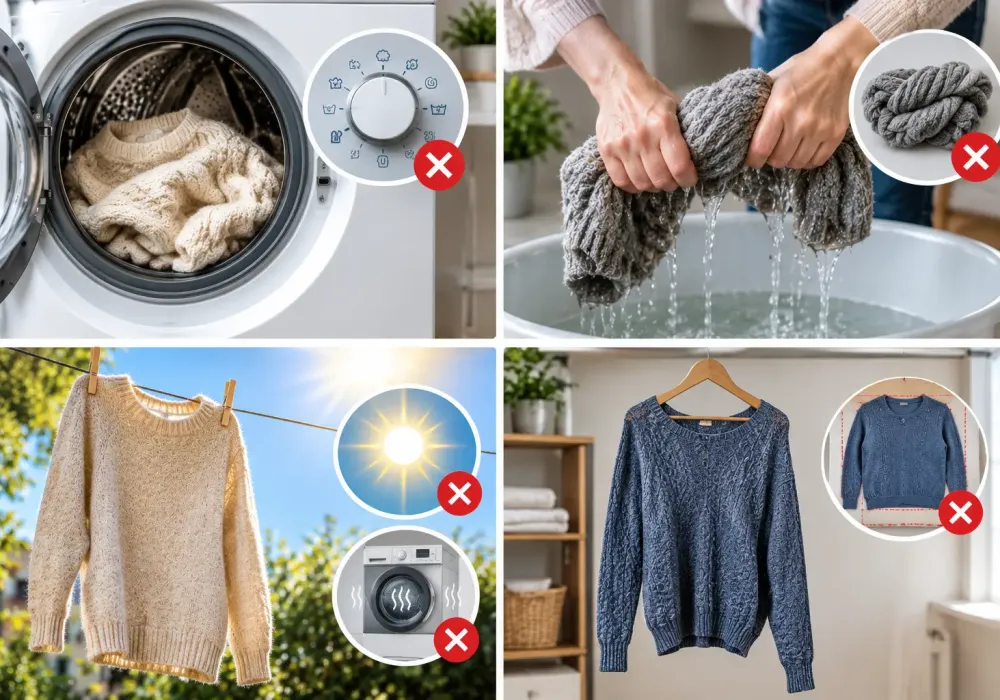
Even when you use a suitable detergent, the wrong washing or drying technique can damage woollen clothes. Understanding these mistakes can help you protect sweaters, jackets and other winter garments.
Using a Regular Washing Machine Cycle
Standard washing programmes may involve more movement, spinning and temperature changes than wool can tolerate. This can lead to shrinkage, felting or distortion.
Before using a washing machine, check whether the garment permits machine washing. If the label specifies handwashing or dry cleaning, follow those instructions instead.
Wringing or Twisting the Fabric
Twisting wet woollen clothes to remove excess water can stretch or distort the fibres. This is particularly risky for heavier jumpers and delicate knitted garments.
If handwashing is permitted, handle the garment gently and follow the care label's instructions for removing excess water. Avoid twisting or pulling the fabric.
Drying Woollens in Direct Sunlight or a Dryer
Excessive heat can affect woollen garments, especially when combined with movement or unsuitable drying conditions. A tumble dryer should only be used if the garment's care instructions permit it.
Direct sunlight may also affect the colour of some fabrics over time. Follow the label's drying instructions and avoid placing woollens near radiators or other strong heat sources.
Hanging Wet Woollens (Stretching and Misshaping)
Wet woollen garments can become heavy and stretch under their own weight. Hanging a wet jumper or cardigan may leave it longer, wider or unevenly shaped.
Where the care label permits, reshape the garment gently and dry it flat on a suitable surface. Keep it away from direct heat and allow enough airflow for the fabric to dry completely.
How Professional Laundry Services Prevent Woollen Shrinkage
Professional laundry services assess the garment before choosing a cleaning method. This matters because woollen clothes vary in fibre composition, construction and care requirements. The right approach can help reduce the risk of shrinkage and preserve the garment's appearance.
Fabric Inspection and Care Label Check
Before cleaning woollen clothes, a professional cleaner can assess the fabric, check the care label and identify any existing stains or damage.
This assessment helps determine whether the garment is suitable for wet cleaning, a specialist wool-cleaning process or dry cleaning. It also helps identify delicate trims, linings and other details that need extra attention.
Gentle Cleaning with Wool-Safe Detergents
When the care instructions permit washing, suitable cleaning products and gentle handling can help protect wool fibres. Professional cleaners select products according to the garment's requirements rather than using the same detergent for every item.
This approach can help maintain the fabric's softness and appearance while addressing everyday dirt and residue. However, the appropriate product and method depend on the specific garment.
Temperature-Controlled Washing or Dry Cleaning
Water temperature and mechanical movement can influence wool shrinkage. Professional cleaners consider these factors when selecting a suitable method for the garment.
Some woollens can tolerate carefully controlled washing, while others require dry cleaning. Neither method is automatically suitable for every wool garment, so the care label and fabric assessment should guide the decision.
Proper Drying and Shaping Techniques
Cleaning is only part of wool garment care. Incorrect drying can stretch, distort or shrink a garment, depending on the fabric and conditions.
Suitable drying and shaping methods help support the garment's original dimensions and appearance. Professional handling can be particularly helpful for heavier sweaters, structured jackets and delicate woollen items.
Careful Pressing and Finishing
Excessive heat and pressure can affect wool fibres and leave unwanted marks. Professional finishing takes account of the fabric and garment construction.
Appropriate handling helps the garment look neat and presentable without relying on excessive heat. Results depend on the material, its condition and the manufacturer's care instructions.
Benefits of Choosing Professional Laundry for Woollen Clothes
Professional wool garment cleaning can be a convenient option when you want to protect delicate winter clothing or are unsure how to clean it safely.
Longer Life for Sweaters, Shawls, and Jackets
Woollen garments can remain useful for many seasons when you care for them correctly. Avoiding unsuitable washing, excessive heat and rough handling can help reduce unnecessary wear.
Professional cleaning offers an alternative when the care label recommends specialist treatment or home washing presents a risk.
Softness, Colour, and Shape Retained
Wool fibres, dyes and garment construction can respond differently to cleaning. Choosing an appropriate method can help preserve the garment's texture, colour and shape.
Although no cleaning method can guarantee that every garment will remain unchanged, following the care label helps reduce avoidable damage.
Stain and Odour Removal Without Damage
Food spills, perspiration and everyday use can leave stains or unpleasant odours on woollen clothing. Professional cleaners can assess these problems and choose suitable treatments.
Some stains may be permanent, so complete removal cannot be guaranteed. Early assessment can help avoid aggressive home treatments that may make the problem worse.
Saves Time and Effort During Winter
Winter wardrobes often include several jumpers, cardigans, coats and scarves that need different types of care. Managing them at home can take time, particularly when garments require careful drying.
Using a professional laundry service can make garment care more convenient, especially for busy households and people with several delicate items.
Which Woollen Items Should You Always Send to a Professional?
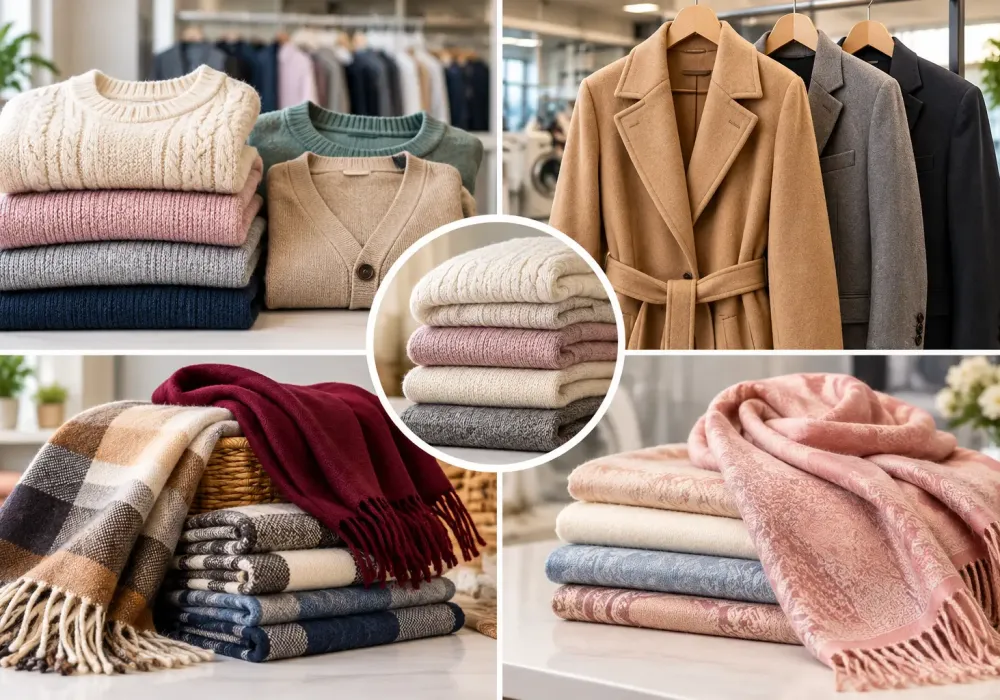
Not every woollen garment needs professional cleaning. However, some items benefit from specialist attention, particularly when their care labels recommend it.
Sweaters, Cardigans, and Pullovers
Knitted woollen garments can stretch, shrink or lose their shape if you wash and dry them incorrectly. Check the care label before washing, especially if the garment contains a wool blend or delicate knitted pattern.
Woollen Coats, Blazers, and Suits
Tailored woollen garments often include linings, padding and structured components. Professional cleaning may be appropriate when the care label recommends dry cleaning or when you are unsure how to care for the garment.
Shawls, Stoles, and Blankets
Large woollen shawls and blankets can be difficult to wash and dry evenly at home. Their weight, size and fabric composition influence the most suitable cleaning method.
Delicate Items Like Pashmina or Cashmere
Cashmere and fine pashmina garments require careful handling because their fibres and finishes can be delicate. Always follow the care label and seek professional advice if you are unsure about washing them at home.
Quick Tips to Care for Woollens Between Laundry Visits
You can maintain woollen clothes between professional cleans with a few simple habits:
- Fold knitted garments: Store sweaters and cardigans flat to help prevent stretching.
- Air them out: Let garments air after wearing them before returning them to the wardrobe.
- Brush gently: Remove loose dust with a suitable clothing brush where appropriate.
- Protect against moths: Keep stored woollens clean and use suitable moth-protection measures.
- Treat marks carefully: Check the care label before attempting stain removal.
- Store them properly: Keep woollens in a clean, dry place away from moisture.
These habits can help maintain your winter wardrobe, but they do not replace professional cleaning when the garment requires it.
What Makes BandBox Laundry the Right Choice for Woollens?
At BandBox Laundry, we provide professional laundry and dry-cleaning services in Manchester. We understand that woollen garments need appropriate care, and the cleaning method should depend on the garment's fabric and care instructions.
Experience with Delicate Fabrics
Different garments have different cleaning requirements. Checking the fabric and care label helps identify a suitable approach for woollen clothing and other delicate items.
Eco-Friendly and Wool-Safe Products
The cleaning method and products must suit the garment being treated. Our cleaning approach focuses on appropriate garment care, with a 100% non-toxic cleaning process as part of our service offering. Always check the garment's care requirements before selecting a treatment.
Pickup and Delivery Convenience
Finding time to manage laundry during winter can be difficult. BandBox Laundry offers free collection and delivery within 48 hours in its service area, helping customers in Manchester manage their clothing care more conveniently.
Same-day service is also available when required.
Transparent Pricing and Reviews
Before arranging professional cleaning, ask about the price, the cleaning method and any special requirements for your garment. You can also review customer feedback to understand other customers' experiences.
For woollen clothes that require professional attention, contact BandBox Laundry to discuss the garment and its care label before arranging a suitable service.
Frequently Asked Questions
Can shrunk woollen clothes be restored?
Some shrunken wool garments may regain a little of their shape with careful treatment, but heavily felted or damaged fibres may not return to their original condition. Avoid forcefully stretching the garment, as this can cause further distortion. Seek professional advice before attempting restoration.
How often should woollens be professionally cleaned?
There is no single schedule for every woollen garment. Cleaning frequency depends on how often you wear it, whether it has stains or odours, and the care label. Airing and gentle maintenance between cleans can help keep woollens fresh.
Is dry cleaning better than wet washing for wool?
It depends on the garment. Some woollens are suitable for gentle washing, while others require dry cleaning. Check the care label and consider the garment's construction before choosing a method.
How much does professional woollen cleaning cost?
The price depends on the garment type, fabric, size and cleaning requirements. A wool jumper may have different cleaning needs from a tailored coat or cashmere shawl. Contact BandBox Laundry for information about pricing for your specific garment.
Final Thoughts: Protect Your Winter Wardrobe the Smart Way
Woollen clothes can shrink when unsuitable heat, moisture, friction or drying methods affect their fibres. Understanding these risks and following the care label can help you avoid common washing mistakes and maintain your favourite winter garments.
Professional laundry services can help reduce the risk of shrinkage by assessing the fabric, choosing an appropriate cleaning method and handling the garment carefully. However, results depend on the garment's composition, condition and care requirements.
For customers in Manchester, BandBox Laundry provides professional laundry and dry-cleaning services, with free collection and delivery within 48 hours and same-day service available when required. Choosing suitable garment care can help you look after your woollen wardrobe throughout the colder months.