How a Professional Dry Cleaner Cleans a Trench Coat Without Losing Its Shape

A trench coat is designed to keep its smart appearance through changing weather, but washing it incorrectly can affect its shape, lining and protective finish. Professional trench coat cleaning helps protect these details by using a cleaning method suited to the fabric and construction.
Many trench coats use cotton gabardine, structured shoulders, fitted linings and belts that need careful handling. Putting one straight into a washing machine can cause shrinkage, stiffness or uneven changes in the coat's fit.
If you want to keep your coat looking its best, professional care can make a difference. Bandbox Laundry in Manchester offers garment care services for clothing that needs careful attention, helping customers look after their everyday and special garments.
Why Trench Coats Lose Their Shape After Washing
A trench coat is more complicated than an ordinary cotton jacket. Its outer fabric, lining, buttons, belt and shoulder structure all contribute to its overall appearance. When you wash the coat without checking its care requirements, these parts may react differently to water, heat and movement.
Here are three common reasons why trench coats can lose their shape after washing.
Cotton Gabardine Shrinks and Stiffens
Cotton gabardine is a tightly woven fabric often used in traditional trench coats. Its weave gives the material a smooth finish and helps it maintain a smart appearance.
However, incorrect washing can affect its texture and fit. High temperatures, unsuitable detergents and excessive agitation may cause:
- Shrinkage that changes the original fit.
- A stiff or rough texture after drying.
- Creases that become difficult to remove.
- Changes in the fabric's original appearance.
Not every cotton gabardine trench coat has the same care requirements. Some may tolerate specific water-based cleaning methods, while others need professional dry cleaning.
Always check the garment care label before deciding how to clean a trench coat.
Shoulders, Collar, and Belt Lose Structure
The shape of a trench coat depends on more than its outer fabric. The shoulders, collar, cuffs and belt all help create its recognisable design.
Machine washing can put unnecessary stress on these areas. Spinning and tumbling may twist the belt, flatten parts of the collar or affect the shape of structured shoulders.
Common problems include:
- Shoulders: Padding and internal support may become distorted.
- Collar: The collar may lose its original shape or develop uneven creases.
- Belt: The belt may twist, crease or become misshapen.
- Cuffs: Folded sections may lose their neat finish.
Professional garment care considers these details during cleaning and finishing. This helps protect the coat's original design rather than treating it like ordinary everyday laundry.
Lining and Outer Fabric Shrink at Different Rates
A trench coat often contains a lining made from a different material to its outer fabric. These two layers may react differently to water, temperature and drying.
For example, the outer cotton fabric and synthetic lining may shrink or relax at different rates. This can create tension between the layers and affect how the coat hangs.
You may notice:
- The lining pulling away from the outer fabric.
- A twisted or uneven appearance.
- The coat feeling tighter around the body.
- The hem or sleeves no longer sitting correctly.
This is one reason professional cleaning matters. A suitable method should consider the entire garment, including its lining, seams and construction.
Can You Dry Clean a Trench Coat?

Yes, you can dry clean many trench coats, but the correct method depends on the fabric, lining, trims and garment care label. Dry cleaning can be a suitable choice for structured coats that are not designed for ordinary machine washing.
However, dry cleaning is not automatically the right option for every trench coat. Some garments may be suitable for professional wet cleaning instead.
When Dry Cleaning Is the Right Choice
Dry cleaning may be appropriate when the manufacturer recommends it or when the coat contains materials and construction that require solvent-based cleaning.
It can be particularly useful for:
- Structured trench coats with tailored sections.
- Coats with delicate linings or internal support.
- Garments with care labels stating dry clean only.
- Coats with stains that need professional assessment.
A professional cleaner can inspect the garment before choosing the cleaning process.
When Professional Wet Cleaning Is Better
Professional wet cleaning is a specialist water-based cleaning process. It uses controlled equipment, suitable detergents and carefully managed settings to clean garments that may not be suitable for traditional dry cleaning.
Some trench coats, particularly those made from washable fabrics, may be suitable for this method.
The decision depends on the manufacturer's instructions and how the complete garment is constructed. A professional cleaner should assess the fabric, lining and finishing details before recommending wet cleaning.
Why the Care Label Matters
The garment care label provides the manufacturer's cleaning instructions. It should always guide your decision about how to clean a trench coat.
Check for these instructions:
- Dry clean only: Take the coat to a professional dry cleaner.
- Professional wet cleaning: Ask a cleaner with suitable wet-cleaning facilities.
- Machine washable: Follow the specified temperature and washing instructions.
- Do not tumble dry: Avoid tumble drying, as heat may affect the fabric and shape.
If the label is missing or difficult to understand, avoid experimenting with home washing. Ask a professional cleaner to assess the coat first.
How Trench Coat Cleaning Works When Professionals Do It
Professional trench coat cleaning involves more than simply removing dirt. A cleaner needs to consider the fabric, lining, seams, buttons and structured sections before selecting a suitable method.
Here is what usually happens during professional garment care.
Inspection of Fabric, Lining, and Stains
The cleaner first examines the coat to understand its condition and cleaning requirements.
This inspection may include:
- Checking the fabric composition, including cotton gabardine and blended materials.
- Examining the lining, seams, shoulders and belt.
- Identifying visible stains, marks and areas of wear.
- Checking the care label for manufacturer instructions.
- Looking for signs of damage, colour changes or a worn water-repellent finish.
This step helps the cleaner identify potential risks and choose an appropriate treatment.
Cleaning Matched to the Material
There is no single cleaning method suitable for every trench coat. The cleaner selects a process based on the fabric, construction and care instructions.
Depending on the garment, this may involve professional dry cleaning or specialist wet cleaning.
The cleaner may also assess individual marks before treating them. This is particularly important for delicate fabrics and light-coloured trench coats, where unsuitable stain treatments could leave visible changes.
Shaping, Pressing, and Finishing
Cleaning is only one part of the process. Proper finishing also helps maintain the coat's appearance.
After cleaning, the garment may need careful drying, shaping and pressing. The cleaner pays attention to areas such as:
- Shoulders and collar to maintain their original appearance.
- Sleeves and cuffs to remove unwanted creases.
- The belt to keep it neat and presentable.
- The lining to help the coat hang correctly.
- The overall shape and fit to maintain its original design.
The exact finishing process depends on the garment's material and construction. The aim is to return the coat in a clean, presentable condition without unnecessary stress on its structure.
Will Cleaning Affect the Waterproofing?
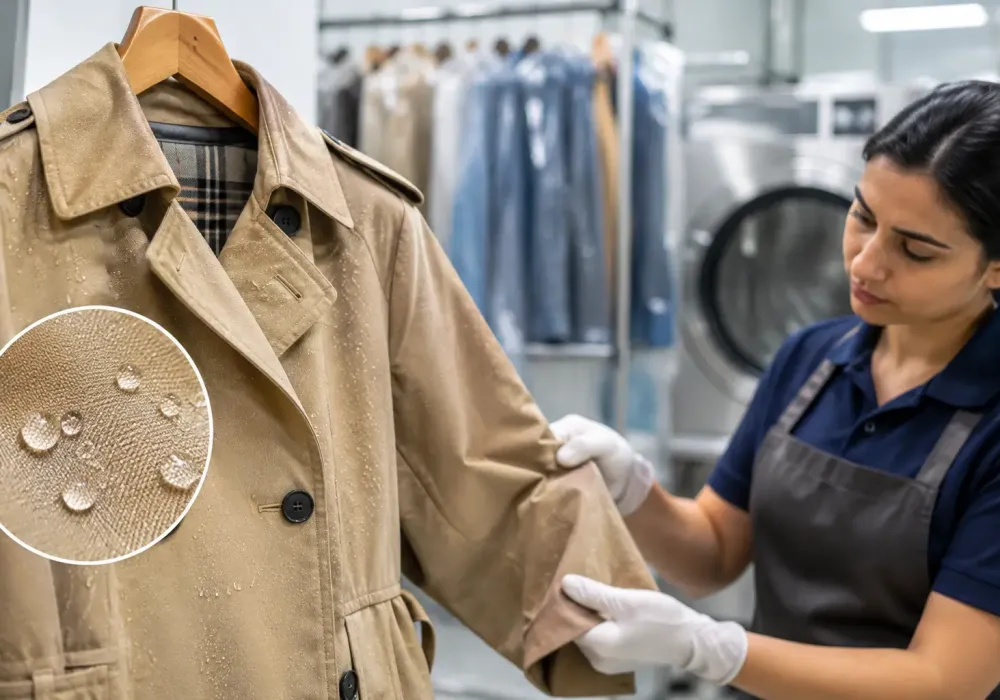
It can. Some trench coats have a water-repellent finish that helps rainwater run off the fabric. Certain cleaning processes, detergents and repeated wear can reduce the effectiveness of this finish.
It is important to understand that water-resistant and waterproof do not always mean the same thing. A traditional trench coat may resist light rain without being completely waterproof.
Before cleaning, check the manufacturer's care instructions and ask the cleaner whether the finish needs special consideration.
Do not assume that ordinary cleaning will restore the original water resistance. If the coating has worn away, the garment may need a separate reproofing treatment. Ask whether this service is available before requesting it.
Common Trench Coat Problems Only a Professional Should Fix
Some trench coat problems need more than ordinary washing or ironing. Trying to treat them at home can sometimes make the damage more noticeable.
Stains on Light Beige and Stone Colours
Light beige, cream and stone trench coats can show marks very easily. Common examples include:
- Mud and road splashes around the hem.
- Food and drink stains on the front.
- Marks around the collar and cuffs.
- Make-up or foundation stains.
- Grease and oil marks.
If you notice a stain, avoid rubbing it aggressively or applying household bleach. These actions may spread the mark or affect the fabric's colour.
For better results, have the stain assessed by a professional cleaner. The correct treatment depends on the stain type, fabric and how long the mark has been present. No cleaning method can guarantee the removal of every stain.
Odours from Rain and Damp Storage
A trench coat can develop an unpleasant smell after exposure to rain or storage in a damp wardrobe.
Putting a damp coat away without allowing it to dry properly can encourage musty odours. Heavy perfume or fabric sprays may only cover the smell temporarily.
To help prevent this problem:
- Allow the coat to dry properly after getting caught in the rain.
- Avoid storing it while damp.
- Keep it in a clean, dry wardrobe.
- Arrange professional cleaning if the odour remains.
Professional cleaning may help with removable odour-causing residues, although results depend on the source and condition of the garment.
Creased Belts, Cuffs, and Collars
Belts, cuffs and collars can develop stubborn creases through regular wear and incorrect storage.
Using a hot iron directly on these areas may flatten the fabric or leave unwanted marks, particularly if the material has a special finish.
Professional pressing uses suitable heat and techniques for the garment. This helps improve its appearance while reducing the risk of damaging delicate or structured sections.
How Often Should You Clean a Trench Coat?
You do not necessarily need to clean your trench coat after every wear. Cleaning frequency depends on how often you use it, the weather conditions and whether it develops stains or odours.
Consider professional cleaning:
- Once or twice a season: If you wear the coat regularly, arrange cleaning when it needs freshening or shows visible dirt.
- After heavy rain or stains: Have it assessed if it develops persistent marks or an unpleasant smell.
- Before seasonal storage: Clean the coat when necessary before putting it away for spring and summer.
Always follow the care label and avoid unnecessary cleaning, as repeated treatment can affect some fabrics and finishes over time.
Why Choose Bandbox Laundry for Trench Coat Cleaning in Manchester?

A trench coat is an investment in your wardrobe, so it deserves careful handling. Choosing an experienced cleaner can help you avoid the risks associated with unsuitable home washing.
Bandbox Laundry provides professional garment care in Manchester, with attention to the cleaning requirements of different clothing materials.
Careful Handling of Structured Garments
Trench coats often combine different fabrics, linings and structured details. These features need consideration before cleaning.
A professional assessment helps identify the most suitable cleaning method and finishing requirements for the garment.
Bandbox Laundry is also proud to be Miele's first certified Manchester WetCare professional. Its WetCare system provides an alternative to traditional dry cleaning for suitable garments.
Laundry Pickup and Delivery in Manchester
Finding time to visit a dry cleaner can be difficult when you have a busy schedule.
Bandbox Laundry offers free collection and delivery within 48 hours, helping customers arrange professional garment care more conveniently. Same-day service is also available.
If you need trench coat cleaning in Manchester, contact the team to confirm collection availability and the most suitable service for your garment.
Reliable Turnaround
If you need your trench coat ready for work, travel or an upcoming event, it is worth checking the expected turnaround before arranging cleaning.
The time required can depend on the fabric, cleaning method, stains and finishing requirements. Contact Bandbox Laundry before booking to confirm the estimated completion time.
Frequently Asked Questions
Can you dry clean a trench coat?
Yes, many trench coats can be dry cleaned. However, the correct method depends on the fabric, lining, construction and care label. Some coats may be better suited to professional wet cleaning.
Can you wash a trench coat in a washing machine?
Not every trench coat is machine washable. Washing can cause shrinkage, affect the lining and distort structured areas. Only use a washing machine if the manufacturer's care label clearly permits it.
Will dry cleaning shrink my trench coat?
Professional dry cleaning is designed to clean suitable garments while controlling the risks associated with ordinary washing. However, no method can guarantee zero change. The cleaner should assess the fabric and construction before treatment.
How long does trench coat cleaning take?
The turnaround depends on the cleaning method, fabric, stains and finishing requirements. Ask your chosen cleaner for an estimated completion time before booking.
Final Thoughts: Keep Your Trench Coat Sharp Season After Season
A trench coat needs the right care to maintain its shape, fit and appearance. Its cotton gabardine fabric, lining, belt and structured shoulders can all react differently to unsuitable washing methods.
Before deciding how to clean a trench coat, check the care label and consider its overall condition. Professional cleaning can help manage stains, odours and creases while reducing the risks associated with incorrect home washing.
If you need professional trench coat cleaning in Manchester, Bandbox Laundry can help you explore suitable garment care options. Contact the team to discuss your coat and arrange collection and delivery.
Disclaimer:
The information in this article is provided for general information purposes only. Cleaning results may vary depending on the garment, fabric, stain, and cleaning method used. Always follow the garment's care label and seek professional cleaning for delicate or valuable items. BandBox Laundry accepts no liability for any loss or damage resulting from the use of the information provided.