Why Do Polyester Clothes Hold Odours, and How Can Professional Dry Cleaning Help?

Polyester is popular because it is lightweight, durable and quick-drying. However, it can develop unpleasant smells that remain even after washing. Polyester clothes smell because the fibres can attract oily body residues and retain odour-causing substances from sweat. This makes some polyester garments difficult to keep fresh with ordinary washing alone.
If your gym clothes, work shirts or favourite polyester jacket smell unpleasant shortly after washing, the fabric itself could be part of the problem. Understanding why this happens can help you choose better laundry methods and know when to consider professional dry cleaning. Bandbox Laundry in Manchester can also advise you about suitable garment care options.
Why Do Polyester Clothes Smell Even After Washing?
Polyester does not behave like cotton or other natural fibres. Its structure and surface properties affect how it interacts with sweat, body oils and detergent. As a result, odours can remain in the fabric even when a garment looks clean.
Here are three common reasons.
Oil-Loving Fibres That Trap Body Oil and Sweat
Polyester is a synthetic, relatively hydrophobic fibre. It does not absorb water in the same way as cotton, but it can attract oily substances from the skin.
During everyday wear, your body transfers sweat, sebum and other residues onto clothing. These oily deposits can cling to polyester fibres and contribute to the odour trapped in the fabric.
This is particularly noticeable around:
- Underarms, where sweat and body oils accumulate.
- Collars, which come into regular contact with the skin.
- The back and chest, especially during physical activity.
- Waistbands and areas where clothing fits closely.
Even after washing, some oily residue may remain if the laundry method does not remove it effectively. This is one reason people often search for how to get smell out of polyester.
Bacteria Thriving in Synthetic Fabric
Sweat itself is not usually responsible for the strong smell associated with body odour. The smell develops when microorganisms on the skin break down components of sweat and other body secretions.
When you wear polyester during exercise or in warm weather, sweat and oily residues can build up in the fabric. If washing does not remove these deposits effectively, unpleasant odours may remain.
This is why activewear can develop a sour or musty smell, even when it has been washed recently.
To reduce odour build-up:
- Do not leave sweaty gym clothes in a closed laundry bag for long periods.
- Allow damp garments to dry before placing them in the washing basket.
- Wash sportswear according to its care label.
- Avoid storing clothing while it is still damp.
Low-Temperature Washes That Miss Deep Odours
Low-temperature washing can help protect delicate fabrics and reduce energy use. However, a cool wash may not always remove heavy oily deposits and detergent residue effectively.
If you regularly wash heavily used polyester clothing on a short or unsuitable cycle, odours may gradually build up.
Always follow the garment care label and use a detergent suitable for the fabric. Avoid increasing the washing temperature without checking the instructions, as some synthetic garments can be damaged by excessive heat.
Why Polyester Smells Worse Than Cotton

Have you noticed that a cotton T-shirt stays fresher than a polyester sports shirt after a similar workout? The difference often comes down to how the two fabrics interact with moisture and oily residues.
Cotton Absorbs, Polyester Traps
Cotton is a natural fibre that absorbs moisture. Polyester absorbs much less water, but its surface can attract oily substances that contribute to lingering odours.
This difference helps explain why does polyester smell worse than cotton for some people.
For example:
- Cotton T-shirts absorb more sweat and may feel damp during exercise.
- Polyester sportswear dries quickly but can retain oily residues.
- Repeated wear without effective cleaning can cause odours to build up in either fabric.
Neither material is completely resistant to body odour. The right washing method and drying routine matter for both.
Heat and Friction Make It Worse
Physical activity, warm weather and close-fitting clothing can increase sweat and body oil transfer onto garments.
Friction also creates more contact between the fabric and your skin, particularly around the underarms, back and waistband. When these residues remain in synthetic fabrics, unpleasant smells can become more noticeable.
This is why people who regularly exercise or work in warm environments may find that their polyester clothing needs more careful laundry attention.
Which Polyester Items Hold Odours the Longest?
Some polyester garments experience more sweat, friction and repeated wear than others. These items may develop persistent smells if you do not wash and dry them properly.
Gym Wear and Activewear
Sports tops, leggings, running shirts and polyester gym clothes often hold sweat and body oils from exercise. Tight-fitting designs can also increase contact with the skin.
If you notice a sour smell returning shortly after washing, your activewear may need a more suitable cleaning routine.
Work Shirts, Blouses, and Uniforms
Polyester work shirts, blouses and uniforms can develop odours around the collar, underarms and back. Wearing the same garments for long working hours can increase the build-up of sweat and body oils.
Regular cleaning is important, particularly when you wear synthetic uniforms every day.
Fleeces, Jackets, and Linings
Polyester fleeces, jackets and garment linings can also retain unpleasant smells. These items may not need washing as frequently as gym clothing, but body oils, moisture and everyday use can still affect their freshness.
Always check the garment care label before washing or arranging professional cleaning, especially for lined jackets and structured garments.
Why Home Washing Often Fails to Remove Polyester Smell
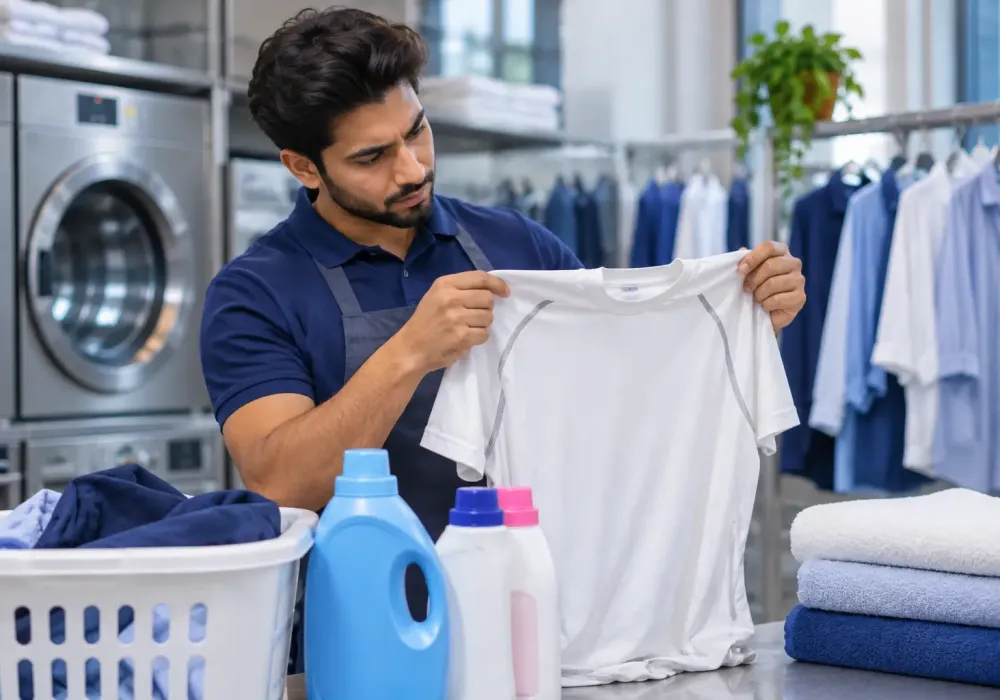
Washing polyester clothes regularly does not always remove every unpleasant smell. The problem may come from oily residue, detergent build-up, unsuitable washing settings or incorrect drying.
If your clothes smell fresh immediately after washing but develop an unpleasant odour again after a few hours, consider these common causes.
Detergent and Softener Residue Lock Odours In
Using too much detergent does not necessarily make clothes cleaner. Excess detergent can leave residue on garments, particularly when the washing machine is overloaded or the rinse cycle does not remove it properly.
Fabric softener can also leave a coating on some synthetic fabrics. This may affect moisture management in sportswear and contribute to residue build-up.
To improve your washing routine:
- Follow the detergent manufacturer's recommended dosage.
- Avoid using too much fabric softener on activewear.
- Do not overload the washing machine.
- Use an appropriate rinse cycle.
- Clean the washing machine regularly.
These steps can help reduce residue and prevent unpleasant smells from building up.
Perfumed Products Only Mask the Smell
Strongly scented detergents, fabric conditioners and laundry sprays may make polyester clothes smell fresher temporarily. However, fragrance does not necessarily remove the body oils and residues responsible for persistent odours.
If the smell returns after a few hours, the underlying residue may still be present.
Instead of relying on stronger perfumes, focus on suitable cleaning methods that remove dirt and oily build-up without damaging the fabric.
Repeated Washing Can Make the Smell Return Faster
Repeated washing with unsuitable products or cycles may not solve the problem. It can also put unnecessary wear on clothing, particularly when you frequently wash delicate synthetic garments.
If you keep washing the same polyester shirt or sports top but the smell remains, check the care label and review your laundry routine.
For stubborn odours, professional advice may help you identify a more suitable cleaning approach.
How Professional Dry Cleaning Helps Remove Odours
When ordinary washing does not remove persistent smells, professional garment cleaning may be worth considering. Professional dry cleaning uses specialised cleaning processes and solvents rather than a conventional water-based washing cycle.
However, dry cleaning is not suitable for every polyester garment. The correct method depends on the fabric composition, garment construction, care label and type of contamination.
Deeper Cleaning That Reaches the Fibres
Professional cleaners assess the garment before selecting a suitable cleaning process. Depending on the fabric and the cleaning method, professional treatment may help remove oily residues and other soil that contribute to lingering odours.
This can be useful for garments that have developed persistent smells around the underarms, collars or other areas that experience regular contact with the skin.
If you want to know how to remove sweat smell from gym clothes, remember that not every sports garment should be dry cleaned. Many activewear items require a specific water-based washing method instead.
Methods Matched to the Care Label
A garment's care label provides important information about suitable cleaning methods. Some polyester clothing can be dry cleaned, while other items are designed for machine washing or professional wet cleaning.
A professional cleaner can assess factors such as:
- The polyester fabric and any blended fibres.
- Decorative details, prints and coatings.
- Lining, padding and garment construction.
- The care label's cleaning instructions.
- The type and severity of the odour.
This assessment helps determine whether dry cleaning or another professional cleaning method is appropriate.
A Fresh, Odour-Free Finish
Professional cleaning can help reduce odours caused by removable body oils and other residues. It may also improve the overall freshness and appearance of suitable garments.
However, no cleaning process can guarantee the complete removal of every smell. Persistent odours may have several causes, including contamination within linings, previous damage or residues that have become difficult to remove.
A professional cleaner can explain what treatment may be suitable before proceeding.
Signs Your Polyester Clothes Need Professional Cleaning
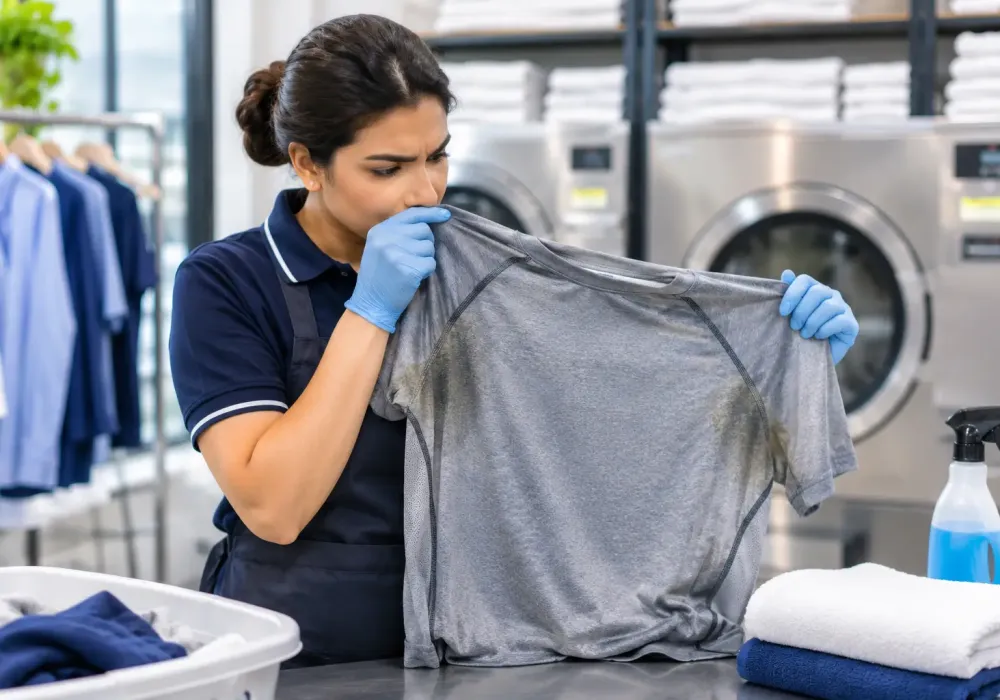
You may need professional garment care when your regular laundry routine no longer keeps your polyester clothing fresh.
Look out for these signs:
- The smell returns within hours: Your garment smells fresh after washing but develops an unpleasant odour again.
- The smell stays after washing: You can still notice sweat or musty smells even when the clothes are dry.
- Armpits or collars smell sour: These areas may contain a build-up of sweat and body oils.
- The fabric feels greasy: Oily residue may remain on the garment.
- You wear the item regularly for work or sport: Frequent use can increase the build-up of body oils and sweat.
If you notice these problems repeatedly, check the garment care label and ask a professional cleaner about suitable treatment.
Why Choose Bandbox Laundry for Dry Cleaning in Manchester?
Persistent garment odours can be frustrating, particularly when you regularly wear polyester workwear, jackets or other synthetic clothing.
Bandbox Laundry provides professional garment care in Manchester. If you are looking for dry cleaners in Manchester, you can contact the team to discuss your garment's fabric, cleaning requirements and available services.
Careful Handling of Synthetic Fabrics
Synthetic garments need suitable cleaning methods to protect their fibres, shape and finish. Polyester clothing may also contain other materials, linings or decorative details that affect how it should be cleaned.
Bandbox Laundry can help you discuss suitable garment care options before arranging a cleaning service. Always share any particular concerns, such as persistent underarm odours or delicate garment details.
Laundry Pickup and Delivery in Manchester
A busy routine can make it difficult to visit a laundry shop whenever your clothes need attention.
Bandbox Laundry offers free collection and delivery within 48 hours in its service area. You can contact the team to check collection availability and discuss your requirements.
This makes arranging professional garment care more convenient for customers looking for laundry pickup and delivery in Manchester.
Reliable Turnaround
If you need a polyester shirt, jacket or uniform cleaned for work or an upcoming event, ask about the expected turnaround before booking.
Bandbox Laundry also offers a same-day service. Contact the team to confirm whether your particular garment and cleaning requirements can be accommodated within that timeframe.
Frequently Asked Questions
Why do polyester clothes smell after washing?
Polyester fibres can attract oily body residues and retain substances that contribute to unpleasant odours. If your washing routine does not remove these deposits effectively, the smell may remain after washing or return once you start wearing the garment.
Can dry cleaning remove sweat smell from polyester?
Professional dry cleaning may help remove oily residues and reduce some persistent odours from suitable polyester garments. However, not all polyester clothing is suitable for dry cleaning. The cleaner should check the care label and garment construction before choosing a method.
How often should I clean polyester work clothes?
The cleaning frequency depends on how often you wear the garment, your working environment and how much you sweat. Wash regularly worn work shirts and uniforms according to their care labels. Clean garments promptly when they become sweaty or visibly soiled rather than allowing odours to build up.
Is polyester safe to dry clean?
Many polyester garments can be dry cleaned, but this does not apply to every item. Some polyester clothing contains coatings, prints, blends or other details that require a different cleaning method. Always check the care label and consult a professional cleaner if you are unsure.
Final Thoughts: Fresh Polyester Without the Lingering Smell
Polyester is practical, durable and quick-drying, but its interaction with body oils and sweat can make unpleasant odours difficult to remove. That is why polyester clothes smell even after washing in some cases.
Using the correct detergent, avoiding excess fabric softener, washing sweaty garments promptly and following care labels can help prevent odour build-up. When these steps do not solve the problem, professional garment cleaning may offer another option.
If you are struggling with persistent smells in your synthetic clothing, contact Bandbox Laundry for advice about suitable garment care and dry cleaning in Manchester.
Keep your everyday clothing fresh and ready to wear with the right cleaning approach.
Disclaimer:
The information in this article is provided for general information purposes only. Cleaning results may vary depending on the garment, fabric, stain, and cleaning method used. Always follow the garment's care label and seek professional cleaning for delicate or valuable items. BandBox Laundry accepts no liability for any loss or damage resulting from the use of the information provided.