How Do Professional Cleaners Protect Beads, Sequins, and Embellishments During Cleaning?
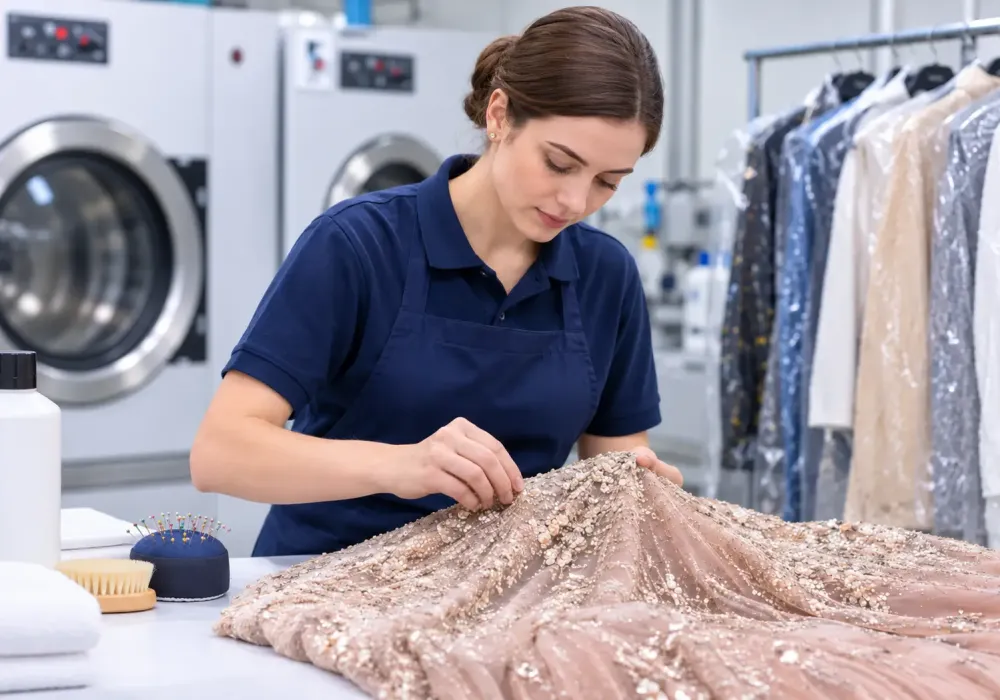
Beaded dresses, sequin tops and embellished jackets need extra care when cleaning. Even a gentle-looking wash can loosen beads, damage delicate trims or pull threads away from the fabric. To protect beads during cleaning, professional cleaners first inspect the garment, identify how the decorations are attached and select a suitable cleaning method.
The right approach depends on the fabric, bead material and condition of the stitching. Glass and plastic beads, for example, may react differently to heat, cleaning products and friction.
If you own an embellished outfit for a wedding, party or special occasion, understanding professional garment care can help you avoid unnecessary damage. At BandBox Laundry in Manchester, delicate garment care starts with considering the garment's material and cleaning requirements.
Why Beads and Embellishments Are Easily Damaged in Cleaning
Beads and sequins may look securely attached, but repeated wear and incorrect cleaning can weaken their stitching or adhesive. Some garments also combine several materials, which makes cleaning more complicated.
Here are three common reasons embellished clothing needs careful handling.
Glue, Thread, and Stitching Weaken Over Time
Manufacturers attach beads and sequins using different techniques. Some use hand-stitched embroidery, while others rely on adhesive or machine stitching.
Over time, these attachments can weaken because of:
- Repeated wearing and movement.
- Pulling or catching against bags and other clothing.
- Previous washing or unsuitable cleaning products.
- Ageing adhesive and weakened threads.
If you notice loose beads or missing sequins, avoid pulling at the surrounding decoration. A cleaner should inspect the affected area before deciding how to handle the garment.
Heat, Solvents, and Water Affect Different Trims
Not all embellishments respond in the same way to cleaning. Glass beads may tolerate certain conditions better than plastic decorations, while metal trims can tarnish or react to unsuitable products.
Heat can also affect adhesive and some synthetic materials. Water and cleaning agents may cause colour changes, dull finishes or weakened attachments, depending on the materials used.
This is why professional cleaners do not assume that every embellished garment needs the same treatment. They consider the garment care label and the construction before selecting a suitable process.
Friction and Tumbling Cause Snags and Loose Beads
Friction is another common cause of damage. When garments rub against other clothes, zips or the inside of a washing machine drum, delicate decorations can catch or become loose.
A standard washing machine cycle can create several problems:
- Sequins may catch on other garments.
- Beads may become detached from weakened stitching.
- Delicate trims may twist or tangle.
- Embellished fabric may stretch or lose its original shape.
Professional handling helps reduce unnecessary movement and friction during cleaning.
What a Professional Checks Before Cleaning an Embellished Garment
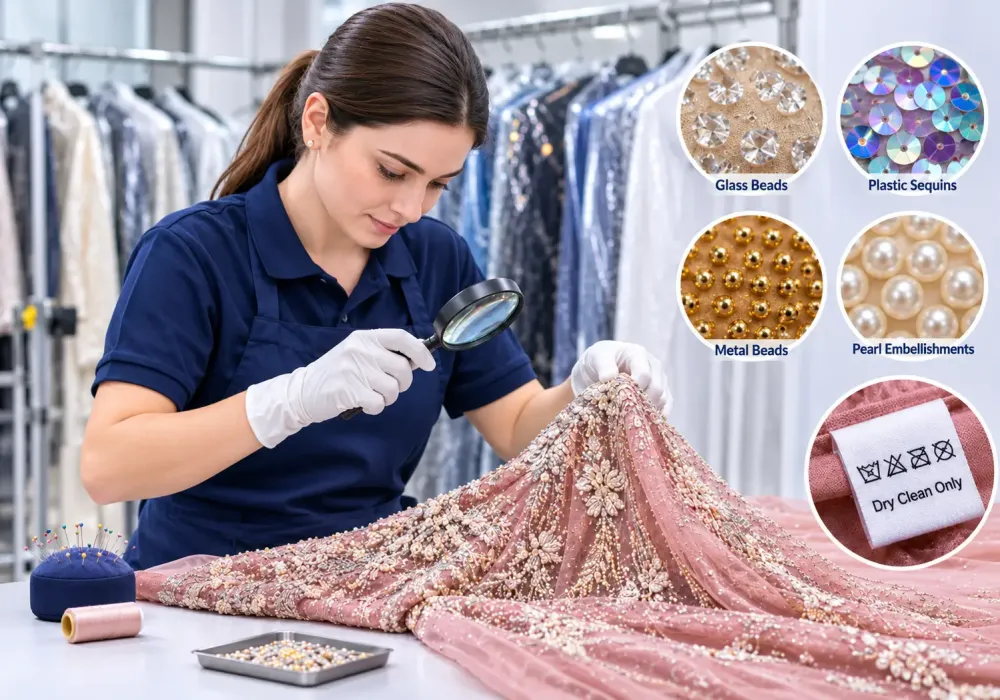
Before choosing how to clean a beaded dress, a professional cleaner needs to understand its materials and condition. This inspection helps identify potential risks and determine whether the garment is suitable for the available cleaning methods.
Bead Type: Glass, Plastic, Metal, or Pearl
The type of decoration affects how a garment should be handled.
- Glass beads: These can be fragile and may chip or break if they strike hard surfaces.
- Plastic beads: Some types can soften, warp or lose their finish when exposed to unsuitable heat or cleaning products.
- Metal beads: These may tarnish, corrode or change appearance depending on their coating and exposure.
- Pearl embellishments: Their coating and surface finish may be sensitive to chemicals, heat and abrasion.
Identifying the bead material helps the cleaner assess which gentle cleaning methods may be appropriate.
How Each Bead Is Attached
A professional checks whether the decorations use hand stitching, machine stitching or adhesive. Hand-stitched embroidery may require particular attention because individual threads can loosen or break.
Adhesive-backed decorations also need careful assessment, as some cleaning processes may weaken the bond.
Loose Threads, Missing Beads, and Weak Spots
The cleaner examines the garment for existing damage before starting treatment. This includes:
- Loose or missing beads.
- Broken threads around embellishments.
- Torn mesh or delicate fabric.
- Weak seams and damaged fastenings.
- Areas where decorations have started to lift.
Identifying these problems beforehand helps avoid treating an already damaged area as if it were in perfect condition.
The Care Label and Any Special Instructions
The garment care label provides important information about permitted cleaning methods. Some embellished garments carry dry-clean-only instructions, while others may specify professional wet cleaning or another method.
Always share any additional care instructions with your cleaner. If the label is missing or unclear, the cleaner may need to assess the garment further before confirming whether they can safely clean it.
Do not assume that every beaded dress is suitable for dry cleaning. The fabric, decoration, stitching and manufacturer's instructions all matter.
How Professionals Protect Beads and Sequins During Cleaning
Professional cleaners follow a careful process to reduce the risk of damage to embellished garments. They consider the fabric, decoration and garment condition before choosing how to clean it.
Here are five important steps involved in protecting beads and sequins.
1. Test the Cleaning Method on a Hidden Area First
Before treating the entire garment, a cleaner may test the proposed method on a discreet area, where appropriate. This helps assess how the fabric, colour and decorative materials respond.
A hidden-area test can help identify potential colour transfer, surface changes or reactions to a cleaning product. However, it cannot guarantee that every part of the garment will respond in exactly the same way.
2. Choose a Gentle, Fabric-Safe Process
The cleaner selects a suitable process based on the garment care label and inspection results. Some embellished garments may be suitable for professional dry cleaning, while others need a specialist alternative.
The decision considers:
- The main fabric, such as silk, satin or chiffon.
- Whether the decorations use glass or plastic beads.
- How the sequins and embellishments are attached.
- Any special manufacturer instructions.
The aim is to clean the garment while minimising unnecessary stress on its fabric and decorative details.
3. Protect the Embellished Areas from Rubbing
Friction can loosen decorations and cause delicate threads to catch. Professional cleaners take care to reduce unnecessary contact during handling and cleaning.
Depending on the garment and cleaning method, they may use suitable protective handling techniques to limit friction around delicate trims and hand-stitched embroidery.
4. Avoid Harsh Heat and Excess Agitation
High temperatures and excessive movement can affect certain embellishments, adhesives and synthetic materials.
A suitable cleaning process avoids unnecessary heat and agitation. This is particularly important for garments with plastic beads, glued decorations or delicate mesh panels.
5. Dry and Press with Care
The cleaning process does not end when the garment comes out of the cleaning equipment. Drying and finishing also need attention.
Professionals select suitable drying conditions and avoid applying direct heat or heavy pressure to delicate decorations. If the garment needs steaming or pressing, they consider its fabric and embellishments before choosing the finishing method.
Which Embellished Garments Are Safe to Send for Professional Cleaning?
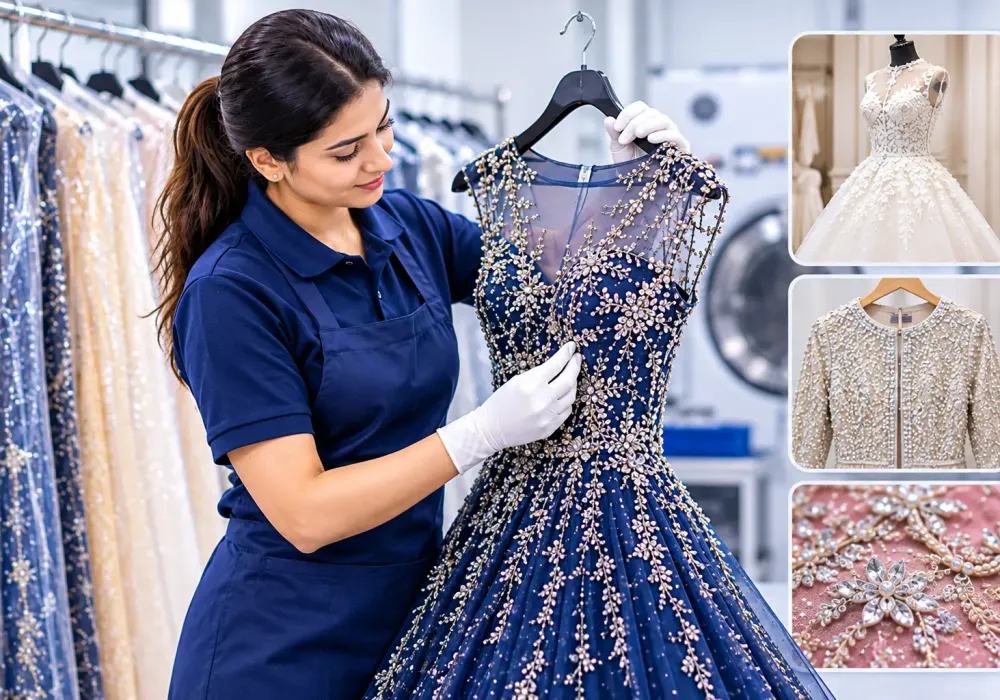
Many embellished garments can receive professional cleaning, but the correct method depends on their construction and care instructions. Always arrange an assessment before assuming a particular garment can be cleaned.
Evening Dresses and Gowns
Evening gowns often feature sequins, beads, embroidery and delicate overlays. These details can make ordinary washing unsuitable.
Professional assessment is particularly useful for long gowns with layered skirts, fitted bodices or decorative trains. A cleaner can check the fabric and embellishments before recommending a suitable process.
Wedding and Bridesmaid Dresses
Wedding and bridesmaid dresses may contain lace, pearls, sequins, embroidery and several layers of fabric. They can also develop marks from makeup, food, drinks and outdoor use.
Professional wedding dress cleaning requires attention to both the main material and its decorative details. Tell your cleaner about visible stains and any previous attempts to remove them.
Beaded Tops, Jackets, and Cardigans
Beaded tops, embellished jackets and decorative cardigans also need careful handling. Their beads may sit close to seams, cuffs, collars and fastening areas, where friction can cause damage.
Before sending these items for cleaning, check for loose decorations and point out any damaged areas to the cleaner.
Items That May Need Special Handling
Some garments may require additional assessment or specialist treatment. These include:
- Vintage garments with fragile stitching.
- Heavily embellished dresses with loose beads.
- Outfits containing several different fabric types.
- Garments with metallic or delicate decorative coatings.
- Items with missing care labels or unclear cleaning instructions.
A cleaner may advise against treatment if they cannot identify a suitable method or believe the process could cause damage.
Why Home Cleaning Is Risky for Embellished Clothes
You may wonder how to clean a beaded dress at home, especially if it only has a small mark. However, home cleaning can create problems when you do not know how the fabric and decorations will react.
Water and Detergent Can Loosen Glue and Dull Beads
Some adhesives can weaken when exposed to water or cleaning products. Certain beads and sequins may also lose their finish when they come into contact with unsuitable detergents.
Avoid soaking an embellished garment or applying household stain removers without checking the care instructions.
Rubbing Stains Can Pull Threads and Snag Sequins
Rubbing a stain may seem like a quick solution, but it can pull hand-stitched embroidery and catch nearby sequins.
Instead, avoid scrubbing the affected area. Explain the type and location of the stain to your professional cleaner so they can assess it properly.
Heat from Irons and Dryers Can Melt Plastic Trims
Direct heat can damage some plastic decorations and adhesives. A hot iron may also leave marks on delicate fabrics or flatten decorative textures.
Do not tumble dry an embellished garment unless its care label specifically permits it. Avoid placing an iron directly over beads, sequins or embroidery.
Why Choose BandBox Laundry for Beaded and Embellished Garments in Manchester?
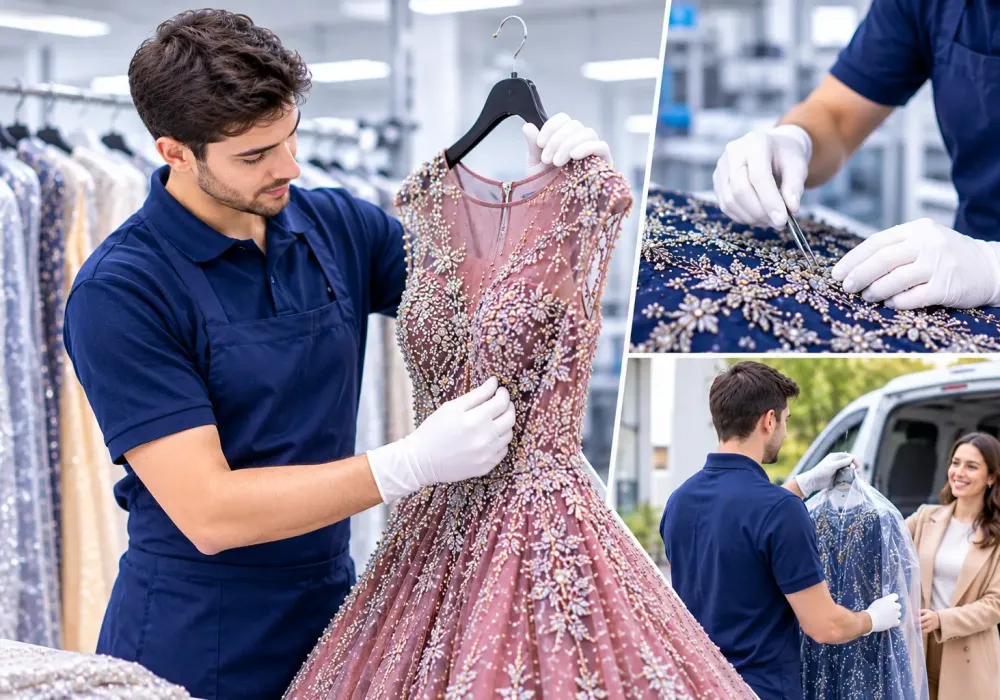
Delicate garments need careful assessment before cleaning. If you are looking for a beaded dress cleaning service or professional garment care in Manchester, BandBox Laundry can help you discuss suitable cleaning options.
The team takes the garment's material and care requirements into consideration when assessing delicate clothing.
Careful Inspection Before Cleaning
Before arranging treatment, it is important to identify the fabric, decorative materials and any existing damage. This helps determine whether the garment is suitable for the available cleaning process.
BandBox Laundry is proud to be Miele's first certified Manchester WetCare professional. WetCare offers a specialist water-based alternative to traditional dry cleaning for suitable garments.
Gentle Handling of Delicate Trims
Beaded dresses, sequin clothing and embroidered garments need careful handling. The appropriate cleaning and finishing method depends on the garment's care label, fabric and construction.
If your outfit has loose beads, delicate lace or special decorative details, mention these when contacting the team so they can assess your requirements.
Laundry Pickup and Delivery in Manchester
Visiting dry cleaners in Manchester can be difficult when you have a busy schedule or an upcoming event.
BandBox Laundry offers free collection and delivery within 48 hours, with same-day service also available. Contact the team to confirm whether your embellished garment can be collected and to discuss its expected turnaround.
Transparent Pricing and Trusted Reviews
The cost of cleaning an embellished garment depends on its size, fabric, decoration, condition and the work required. A heavily beaded evening gown may need a different level of attention from a simple sequin top.
Contact BandBox Laundry for a price assessment before confirming your order. You can also check customer reviews to understand other customers' experiences with the service.
Frequently Asked Questions
Can you dry clean a dress with beads or sequins?
Some beaded and sequin dresses are suitable for professional dry cleaning, but not all. The cleaner must check the fabric, bead material, attachment method and care label before confirming the cleaning process.
Will dry cleaning make beads fall off?
A suitable professional cleaning method aims to minimise the risk of loose or damaged beads. However, dry cleaning cannot guarantee that every decoration will remain attached, particularly if the stitching or adhesive has already weakened.
Can you wash a beaded dress at home?
It is best to avoid machine washing a beaded dress unless the manufacturer specifically permits it. Water, detergent, spinning and friction may damage the decorations or fabric. Check the care label and seek professional advice if you are unsure.
How do you clean sequins without damaging them?
Start by checking the garment care label and identifying the sequin material and attachment method. Avoid rubbing, soaking or applying direct heat. For delicate or heavily embellished garments, ask a professional cleaner to assess the item.
Can Damaged or Loose Beads Be Fixed?
Cleaning and garment repair are different services. A professional cleaner can identify loose beads or damaged stitching during inspection, but repairs may require a specialist alterations or garment repair service. Ask whether this service is available before handing over the garment.
What to Do Before You Hand Over a Beaded Garment
Before taking your garment to a cleaner:
- Check the care label and any manufacturer instructions.
- Point out loose beads, missing sequins or damaged stitching.
- Mention any stains and explain what caused them.
- Tell the cleaner if you have already used a stain remover.
- Discuss the event date and required collection time.
These details help the cleaner assess the garment and understand your expectations.
Final Thoughts: Protect Every Bead with Careful Cleaning
Beaded dresses and embellished garments need more than ordinary laundry care. Their fabrics, stitching, sequins and decorative trims can react differently to water, heat, cleaning products and friction.
Professional inspection and a suitable cleaning method can help reduce the risk of damage while keeping your garment looking its best.
If you need beaded dress cleaning in Manchester, contact BandBox Laundry to discuss your garment's cleaning requirements. Book your beaded garment cleaning with BandBox Laundry in Manchester today.
Disclaimer:
The information in this article is provided for general information purposes only. Cleaning results may vary depending on the garment, fabric, stain, and cleaning method used. Always follow the garment's care label and seek professional cleaning for delicate or valuable items. BandBox Laundry accepts no liability for any loss or damage resulting from the use of the information provided.
Search Blog
Recent Blog