Evening Dress Dry Cleaning: A Fabric-by-Fabric Guide to Getting It Event-Ready

An evening dress can make a special occasion memorable, whether you are attending a wedding, formal dinner, graduation ball or black-tie event. However, delicate fabrics, detailed embellishments and long hems need careful attention to stay in good condition. A small mistake during washing or stain removal can affect the fabric, colour or shape of your outfit.
Professional evening gown dry cleaning helps care for garments that need more attention than everyday clothing. From silk and satin to chiffon, velvet and beaded designs, the right cleaning method depends on the material and its construction.
Before deciding how to clean an evening dress, always check its garment care label. Some gowns require specialist dry cleaning, while others may allow a professional wet-cleaning method. Understanding these differences can help you avoid unnecessary damage and keep your dress ready for its next occasion.
Which Evening Dresses Should Never Go in the Washing Machine?
Not every evening dress can handle a normal washing machine cycle. Delicate fabrics, decorative details and structured designs may lose their shape, develop snags or suffer damage during washing and spinning.
Here are some common evening dress materials that need extra care.
Silk and Satin
Silk and satin evening dresses often have a smooth finish that can easily develop water marks, colour changes or creases if cleaned incorrectly. Silk is a delicate natural fibre, while satin describes a type of fabric weave that can use different fibres.
A standard washing machine cycle may cause problems such as:
- Colour bleeding or uneven marks.
- Snags and damage to the smooth surface.
- Creases that are difficult to remove.
- Changes to the garment's shape or finish.
Check the care label before cleaning. Professional silk and satin dress cleaning can help protect the fabric while addressing dirt and marks using a suitable method.
Chiffon and Tulle
Chiffon and tulle are lightweight fabrics commonly used in flowing evening gowns, layered skirts and formal dresses. Their delicate structure makes them vulnerable to snagging, stretching and tearing.
A washing machine can twist these materials around other garments or damage their fine fibres. This is particularly risky for dresses with several layers or stitched decorative details.
Professional cleaning helps assess the fabric and construction before selecting an appropriate treatment.
Velvet and Crepe
Velvet has a raised surface or pile that gives it a rich appearance. Incorrect washing, rubbing or pressing can flatten this texture and leave visible marks. Crepe also needs careful handling because some varieties can shrink, stretch or lose their original drape.
For these materials, avoid experimenting with household detergents or direct heat. Professional formal dress cleaning can help maintain the garment's texture and appearance.
Sequins, Beads, and Lace
Evening gowns with sequins and beaded embellishments need special attention. Water, friction and spinning can loosen decorative details or cause them to catch on other fabrics.
Lace also has delicate threads and patterns that can snag or stretch.
Before cleaning an embellished gown, consider:
- Whether the beads and sequins are securely attached.
- Whether the decoration covers the entire dress or selected areas.
- Whether the lace is part of the main fabric or an overlay.
- Whether the care label permits dry cleaning or another specialist method.
A professional cleaner can inspect these details and decide how to handle the garment safely.
Common Evening Dress Problems and Who Can Fix Them
Evening dresses often collect marks during weddings, parties and formal events. Some problems may not become visible until you return home and inspect the garment under good lighting.
Professional cleaning can help address many common issues, although the results depend on the stain, fabric, age of the mark and previous treatment.
Wine, Food, and Drink Marks
Wine, sauces and drinks can leave noticeable marks on formal dresses. Avoid rubbing the affected area, as this can spread the stain or push it further into the fibres.
Instead:
- Gently blot fresh liquid with a clean, dry cloth.
- Avoid applying household stain removers.
- Do not use hot water unless the care instructions allow it.
- Tell your cleaner what caused the stain, if known.
Professional stain treatment may help reduce these marks without exposing the whole garment to unsuitable cleaning products.
Makeup, Perfume, and Deodorant Marks
Foundation, lipstick, perfume and deodorant can leave marks around the neckline, sleeves and underarms. These products may contain oils, pigments or other ingredients that become difficult to remove once they settle into the fabric.
Avoid scrubbing these areas. A professional cleaner can assess the mark and choose a suitable treatment for the material.
Dirty or Frayed Hems
Long evening dresses and gowns with trains often touch the floor, collecting dust, mud and dirt around the hem. The bottom edge may also become frayed after repeated wear.
Professional hem and train care can help remove suitable surface dirt and improve the garment's overall appearance. However, cleaning cannot repair torn fabric or replace missing threads.
Underarm Sweat and Odour
Sweat and body oils can build up around the underarms, even when the rest of the dress looks clean. Perfume and deodorant may also contribute to residue and odour.
Leaving these marks untreated for long periods can make them harder to address. Tell your cleaner about any underarm stains or persistent smells before treatment.
Creases and Crushed Fabric
Sitting, travelling and storing a gown incorrectly can create deep creases. Velvet and embellished dresses may also develop flattened areas.
Professional dress pressing and steaming can help improve the garment's finish, but the method must suit the fabric and decoration. Direct heat or heavy pressure may damage delicate details.
Mistakes That Damage an Evening Dress

Evening dresses often use delicate materials and detailed construction that need careful handling. A few common mistakes can affect their colour, texture, shape and decorative details.
Avoid these mistakes to protect your formalwear.
Treating Stains at Home First
Trying to remove a stain with a household cleaning product can make the problem worse. Some stain removers contain chemicals that may affect delicate fibres, dyes or embellishments.
Avoid:
- Scrubbing wine, makeup or food stains.
- Applying bleach or strong cleaning products.
- Rubbing delicate fabrics with a rough cloth.
- Mixing different cleaning products.
If you are unsure how to remove stains from an evening dress, leave the treatment to a professional cleaner. Explain what caused the mark so they can assess the best approach.
Storing It in a Plastic Cover or on a Thin Hanger
Incorrect storage can affect an evening gown even after cleaning. Keeping a dress in a plastic cover for long periods may restrict airflow, while a thin hanger can place unnecessary pressure on the shoulders.
For better storage:
- Use a breathable garment cover suitable for the fabric.
- Choose a padded or shaped hanger when appropriate.
- Avoid overcrowding your wardrobe.
- Store heavy gowns carefully to reduce strain on the shoulders.
For particularly heavy or embellished dresses, follow the cleaner's storage advice.
Leaving Sweat and Makeup Marks to Set
Sweat, body oils, foundation and perfume can leave residue on evening dresses. These marks may become harder to treat when you leave them for several weeks or months.
Check your gown after every event, paying particular attention to the neckline, underarms, cuffs and hem. Arrange professional cleaning when you notice visible marks or persistent odours.
Using the Wrong Detergent and Washing Method
Regular laundry detergent and standard washing programmes are not suitable for every formal garment. Incorrect water temperatures, spinning and drying methods can cause shrinkage, colour changes, stretching or damage to decorative details.
Always read the garment care label before cleaning. If it recommends professional treatment, do not experiment with home washing.
How Often Should You Dry Clean an Evening Gown?
There is no fixed cleaning schedule for every evening gown. The right frequency depends on how often you wear it, the fabric, the level of perspiration and whether it has visible stains.
Use these simple guidelines:
- After wearing: Arrange cleaning if the dress has wine, food, makeup or sweat marks, or has absorbed smoke and noticeable odours.
- Before long-term storage: Have the gown cleaned when needed so that removable dirt and body residue do not remain on the fabric.
- Between wears: Air the dress in a suitable space and hang it properly if it has no visible stains or noticeable odour.
- After occasional use: Check the care label and the garment's condition before deciding whether it needs cleaning.
The best approach is to clean when needed, rather than automatically dry cleaning a gown after every wear. Unnecessary cleaning can put extra stress on delicate materials.
How Professionals Clean and Press a Formal Dress
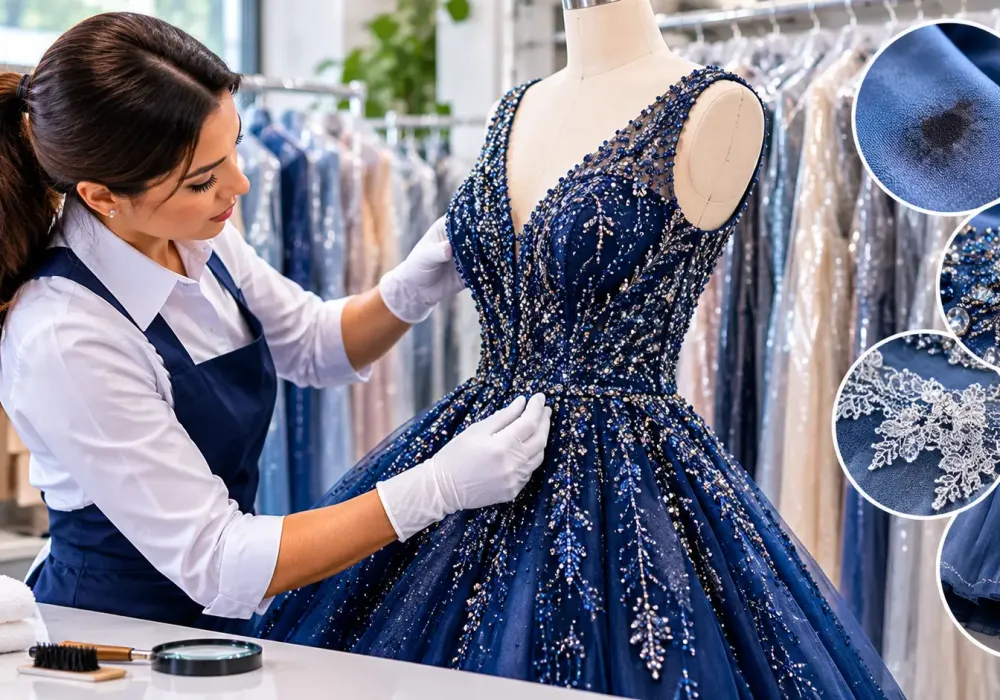
Professional formal dress cleaning and pressing involves more than placing a garment in a cleaning machine. A cleaner first considers the fabric, construction, care label and condition before choosing a suitable method.
Inspecting Stains, Seams, and Embellishments
The first step is a detailed inspection. A professional cleaner checks the dress for visible stains, loose threads, damaged seams and delicate decorations.
They may pay particular attention to:
- Wine, food and makeup marks.
- Loose sequins, beads and embroidery.
- Delicate lace and layered fabric.
- The hem, train, lining and fastenings.
This assessment helps identify areas that need extra care before cleaning begins.
Cleaning Methods Matched to Each Fabric
Different materials respond differently to cleaning. A method suitable for one silk dress may not work for a velvet or chiffon gown.
The cleaner checks the garment care label and selects an appropriate process. Depending on the material and instructions, this may involve professional dry cleaning or a specialist wet-cleaning method.
This is why you should not assume that every evening gown needs the same treatment.
Stain Treatment for Wine, Makeup, and Perfume Marks
Stain treatment depends on the substance involved and the fabric's ability to withstand the process. Wine, foundation, lipstick and perfume marks may require different treatments.
A professional cleaner assesses each mark before applying suitable products. Previous attempts to remove stains at home can affect the results, so always mention any products you have already used.
Although professional treatment can improve the appearance of many stains, complete removal is not guaranteed. Old stains and permanent colour changes may remain visible.
Steaming and Pressing Without Crushing Beading
Once cleaning is complete, the dress may need careful finishing to improve its appearance. Professional dress pressing and steaming can help reduce creases and restore a neat finish.
However, heavy pressure or direct heat can damage sequins, beads, lace and delicate fibres. The finishing method must suit the garment's construction and decoration.
Why Choose BandBox Laundry for Evening Gown Dry Cleaning in Manchester?

An evening gown is often worn for an important occasion, so choosing a cleaner who understands delicate garment care matters. BandBox Laundry provides professional garment care in Manchester, helping customers look after clothing that needs more attention than everyday laundry.
If you need evening gown dry cleaning in Manchester, the team can assess your garment and advise on suitable cleaning options based on its fabric and care label.
Careful Handling of Delicate and Embellished Garments
Silk, satin, chiffon, lace and embellished gowns need different levels of attention. BandBox Laundry is proud to be Miele's first certified Manchester WetCare professional, offering a specialist water-based cleaning alternative to traditional dry cleaning where suitable.
The correct method always depends on the garment's care instructions, material and construction.
Pressing and Finishing for a Polished Look
Cleaning is only one part of preparing a formal outfit. Creases, flattened fabric and an untidy finish can affect how an evening dress looks when you wear it.
Ask BandBox Laundry about suitable finishing options for your gown, particularly if it has delicate embellishments, a structured bodice or a long train.
Laundry Pickup and Delivery in Manchester
Finding time to visit a dry cleaner can be difficult when you are preparing for a wedding, ball or formal event.
BandBox Laundry offers free collection and delivery within 48 hours, with same-day service also available. Contact the team to confirm collection availability and the expected turnaround for your evening gown.
Frequently Asked Questions
How do you clean a gown with sequins or beading?
Start by checking the garment care label. Avoid machine washing, scrubbing or applying strong cleaning products unless the manufacturer specifically permits the method. A professional cleaner can inspect the attachment of the sequins and beads before choosing a suitable cleaning process.
Can dry cleaners remove wine or makeup stains from an evening dress?
Professional cleaners can assess and treat many wine, foundation and makeup stains. However, results depend on the stain's age, the fabric and any previous treatment. Tell your cleaner about the stain as early as possible and avoid rubbing it at home.
How long does formal dress cleaning take?
Turnaround depends on the fabric, garment construction, stains and cleaning method required. Embellished or particularly delicate gowns may need additional inspection and handling. Contact your cleaner before booking if you need the dress ready for a specific event.
How much does evening dress dry cleaning cost?
The cost of evening dress dry cleaning depends on the garment's material, length, embellishments, construction and condition. A simple formal dress may require a different level of work from a heavily beaded or layered evening gown. Ask for a price assessment before confirming the service.
How early should I book before a wedding, ball, or party?
Book as early as possible, particularly during busy wedding and party seasons. Allow enough time for inspection, cleaning and any required finishing. If your event is approaching, contact the cleaner first to confirm whether the required turnaround is possible.
Can dry cleaning remove creases from a formal dress?
Professional cleaning and finishing can help reduce many creases. However, the cleaner may use steaming or careful pressing rather than relying on the cleaning process alone. The appropriate method depends on the fabric, lining and embellishments.
Keep Your Evening Dress Looking Its Best with Professional Cleaning
An evening gown often combines delicate fabrics, detailed embellishments and carefully structured designs. Washing it incorrectly can affect its appearance and make future wear more difficult.
Checking the care label, dealing with stains promptly and choosing the right cleaning method can help protect your outfit. Whether you own a silk evening dress, a satin gown or a beaded formal outfit, professional cleaning can provide the careful attention it needs.
If you are looking for evening gown dry cleaning in Manchester, contact BandBox Laundry to discuss suitable garment care options. With professional garment care and convenient collection and delivery, you can prepare your dress for its next special occasion.
Disclaimer:
The information in this article is provided for general information purposes only. Cleaning results may vary depending on the garment, fabric, stain, and cleaning method used. Always follow the garment's care label and seek professional cleaning for delicate or valuable items. BandBox Laundry accepts no liability for any loss or damage resulting from the use of the information provided.