Why Do Towels Go Stiff and Smell, Even After Washing?
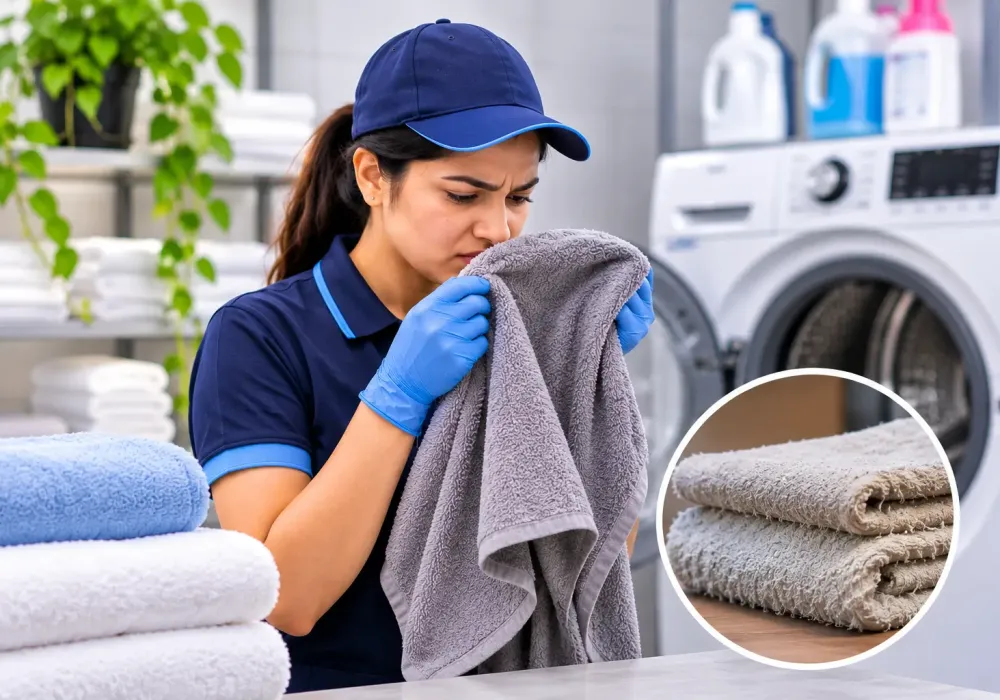
Fresh towels should feel soft, absorb water properly and smell clean. However, many households find that towels smell after washing or become hard and scratchy even after a complete washing cycle. This can happen because of detergent residue, hard water, slow drying or build-up inside the washing machine.
The problem often becomes more noticeable when towels are washed frequently but do not receive the right care. Understanding what causes these issues can help you keep your towels fresh, absorbent and comfortable to use.
In this guide, we explain why towels develop unpleasant odours, why they lose their softness and what you can do to improve their condition.
What Makes Towels Smell After Washing?
A musty smell on towels usually develops when moisture, bacteria or detergent residue remain trapped in the fabric. Towels absorb a lot of water during use, so they need proper washing and thorough drying to stay fresh.
Bacteria and Moisture Trapped in the Fibres
Towels regularly come into contact with water, sweat, skin cells and body oils. When they remain damp for too long, these materials can contribute to unpleasant smells.
The thick loops in towel fibres can also hold moisture, making it harder for towels to dry completely.
To reduce the risk of a mildew smell:
- Hang towels spread out after every use.
- Avoid leaving wet towels in laundry baskets for long periods.
- Wash towels regularly according to their use and care instructions.
- Make sure towels dry completely before folding or storing them.
Slow Drying in Cold, Damp UK Homes
Drying towels can be challenging during colder months in the UK. Rainy weather, limited outdoor drying space and poor indoor ventilation can all slow down the process.
When towels remain damp for several hours, they may develop a musty smell even if you washed them correctly.
Give towels enough space on an airer and improve airflow where possible. If you use a tumble dryer, follow the towel care label and choose a suitable setting.
A Washing Machine That Is Not Fully Clean
Your washing machine can also be responsible when towels smell musty after washing. Detergent residue, lint and moisture can collect inside the drum, rubber seal and detergent drawer.
Over time, this build-up can create unpleasant smells that transfer to your laundry.
Clean the accessible parts of your washing machine regularly and follow the manufacturer's instructions for a maintenance wash. Leave the door and detergent drawer open after use when practical to allow them to dry.
Why Towels Go Stiff and Scratchy

If your towels feel rough after washing, the problem may not be the towel material itself. Washing habits, water quality and product build-up can all affect towel fibres and reduce their softness.
Detergent and Fabric Softener Build-Up
Using too much detergent does not necessarily make towels cleaner. Excess detergent can remain trapped between the fibres, particularly when the washing machine is overloaded or cannot rinse the load properly.
Fabric softener can also leave a coating on towel fibres. Although it may initially make towels feel smoother, regular use can reduce their absorbency.
For better towel care:
- Use the recommended amount of detergent.
- Avoid adding excessive fabric softener.
- Choose a suitable rinse programme.
- Follow the manufacturer's washing instructions.
Reducing detergent and fabric softener residue can help towels retain their natural texture and absorbency.
Hard Water and Limescale in Manchester Homes
Hard water contains dissolved minerals, particularly calcium and magnesium. These minerals can accumulate on fabric over repeated washes and contribute to a rough or stiff texture.
Limescale can also build up inside washing machines, affecting their performance over time.
If you live in an area with hard water, follow your detergent manufacturer's guidance on the correct dosage. A suitable water-softening product may also help reduce mineral build-up, depending on your washing conditions.
Overloading the Machine and Drying on Radiators
Overloading the washing machine prevents towels from moving freely, which can affect washing and rinsing. Detergent and dirt may remain trapped in the fibres.
Drying methods also matter. Placing wet towels directly on radiators can make some areas dry faster than others, leaving the towels unevenly dried.
Wash towels in manageable loads and allow enough space for proper airflow during drying.
Why the Smell and Stiffness Keep Coming Back
Sometimes, towels improve temporarily after washing but quickly become unpleasant again. This usually means the underlying cause has not been addressed.
Residue Stays Deep in the Loops of the Towel
Towels have a looped construction that helps them absorb water. However, these fibres can also hold detergent residue, mineral deposits and everyday dirt.
When build-up accumulates over repeated washes, towels may become less absorbent and feel increasingly rough. It can also contribute to unpleasant odours when moisture remains trapped in the fabric.
Rewashing Often Repeats the Same Problem
If your towels smell musty after washing, simply running another cycle may not solve the issue. The washing machine could still contain detergent residue or mould, or the towels may not be drying properly.
Before rewashing, check the machine, review your detergent quantity and make sure you have suitable drying conditions. Otherwise, the same problem may return after every wash.
Why Home Attempts Often Fail

Home washing can handle everyday towel cleaning, but repeated washing does not always solve persistent odours or stiffness. The problem may relate to fabric build-up, water quality or drying conditions.
Low-Temperature Washes Do Not Reach Deep Odours
Low-temperature programmes are suitable for many everyday loads, but they may not remove every type of heavy soil or odour-causing residue. The correct temperature depends on the towel's care label, the detergent and the level of soiling.
Choose a suitable washing programme rather than automatically using the same setting for every load.
Perfumed Products Only Mask the Smell
Scented detergents and fabric sprays can make towels smell pleasant temporarily. However, they may only cover the mildew smell instead of addressing its cause.
Focus on removing dirt and residue, cleaning your washing machine and allowing towels to dry completely.
Towels Rarely Dry Fully on an Airer
Thick towels can take a long time to dry indoors, particularly during damp UK weather. If you hang several towels close together, limited airflow can leave moisture trapped in their fibres.
Spread towels out on the airer and allow enough space between them. Check that they are completely dry before folding or storing them.
Signs Your Towels Need Professional Cleaning
Consider professional laundry care if you notice any of these problems:
- The musty smell returns within a day of washing.
- Towels feel rough and scratchy even after following suitable care instructions.
- Water beads on the towel surface instead of soaking in.
- Towels have developed a grey or dull appearance.
- You notice a strong mildew smell whenever the towels become damp.
These signs may indicate accumulated residue, fabric wear or persistent moisture problems. A professional assessment can help identify whether further cleaning is suitable.
How Professional Laundry Restores Stiff, Smelly Towels
Professional laundry services can help manage towel cleaning when domestic washing no longer delivers the results you expect. The process should consider the towel material, condition and type of build-up.
Deep Cleaning That Removes Residue
Detergent deposits, everyday dirt and body oils can accumulate in towel fibres. A suitable professional cleaning process can help remove removable build-up and improve the overall cleanliness of the fabric.
Controlled Washing and Thorough Drying
Towels need suitable washing conditions and proper drying to remain fresh. Professional laundry equipment can handle larger loads and provide controlled drying according to the fabric's requirements.
Soft, Fresh, and Odour-Free Finish
Removing accumulated residue and drying towels properly can help improve their feel and reduce unpleasant odours. However, results depend on the towel's condition, water quality and source of the smell. Worn fibres and permanent damage may not be reversible.
Why Choose Bandbox Laundry in Manchester for Your Towels?

If you are struggling with stiff towels or persistent laundry odours, BandBox Laundry offers professional laundry services in Manchester. Customers can enquire about suitable cleaning options for household and commercial towels.
Experience with Household and Commercial Towels
Household towels and commercial towels experience different levels of use. Regular washing, moisture and product build-up can affect their condition over time.
BandBox Laundry provides professional laundry care, helping customers manage their regular laundry requirements with suitable cleaning methods.
Laundry Pickup and Delivery in Manchester
Managing large towel loads can take time, especially when you have a busy household or business. BandBox Laundry offers free collection and delivery within 48 hours, with same-day service also available.
This makes arranging a towel laundry service in Manchester more convenient without having to carry heavy laundry loads to the shop.
Quick, Reliable Turnaround
Having a convenient laundry routine helps ensure you have clean towels available when you need them. Contact BandBox Laundry to discuss collection arrangements and the expected turnaround time for your laundry.
Frequently Asked Questions
Why do towels go stiff after washing?
Towels often become stiff because of detergent residue, fabric softener build-up, hard water minerals or unsuitable drying conditions. Using the correct detergent quantity and avoiding excessive fabric softener can help maintain towel softness.
Why do my towels smell musty even when clean?
Towels may smell musty because moisture, bacteria or detergent residue remain trapped in their fibres. A dirty washing machine and slow indoor drying can also contribute to the problem.
Can a laundry service make towels soft again?
Professional cleaning may help improve towel softness by removing accumulated detergent and dirt residue. However, if the fibres have become permanently worn or damaged, cleaning cannot fully restore their original texture.
How often should towels be washed?
Bath towels should generally be washed after around three to four uses, provided they dry completely between uses. Hand towels and heavily used towels may need more frequent washing. Always follow the care label and adjust the frequency according to use and hygiene requirements.
Final Thoughts: Bring Back Soft, Fresh Towels
Towels can become stiff, scratchy and unpleasant-smelling because of detergent build-up, hard water, trapped moisture and poor drying conditions. Using suitable detergent quantities, cleaning your washing machine regularly and drying towels thoroughly can help prevent these problems.
If your towels continue to smell or lose their softness despite proper home care, professional laundry cleaning may be worth considering.
For convenient laundry care in Manchester, contact BandBox Laundry and discuss your towel cleaning requirements.
Book a pickup with BandBox Laundry in Manchester today.
Disclaimer:
The information in this article is provided for general information purposes only. Cleaning results may vary depending on the garment, fabric, stain, and cleaning method used. Always follow the garment's care label and seek professional cleaning for delicate or valuable items. BandBox Laundry accepts no liability for any loss or damage resulting from the use of the information provided.