Does Silk Saree Dry Cleaning Help Remove Stains Safely?
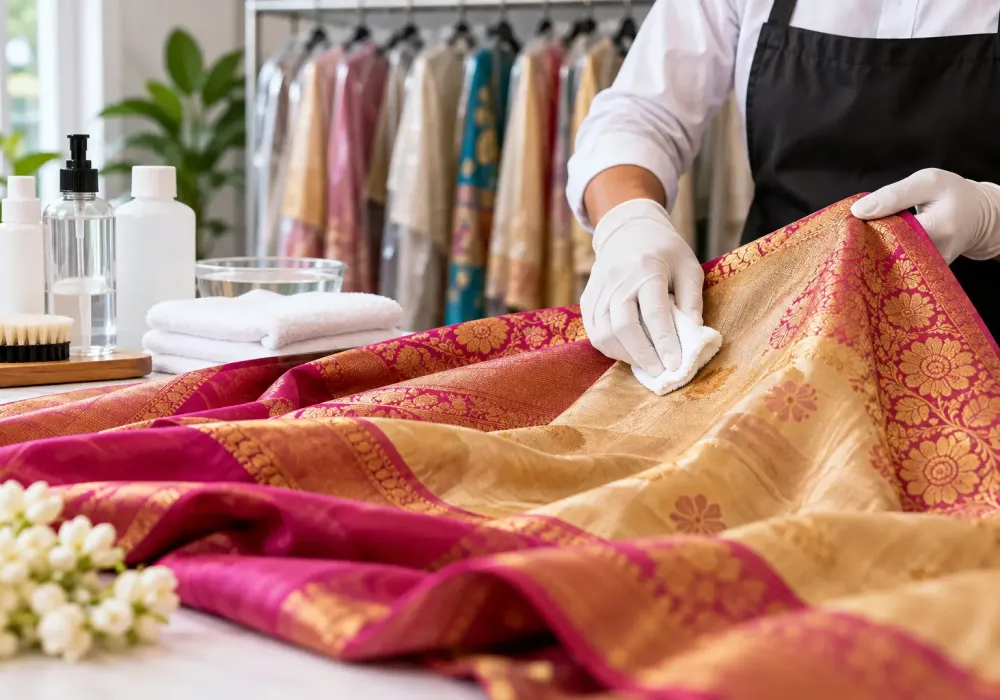
Silk sarees are often treasured for their delicate fabric, rich colours, detailed embroidery and traditional embellishments. However, one small spill or mark can quickly become a concern. Food, oil, makeup, sweat and moisture can leave visible stains, while the wrong cleaning method may affect the silk itself.
This is why silk saree dry cleaning can be an important option when a saree needs careful stain treatment. Silk requires more attention than everyday fabrics, and aggressive cleaning methods can damage its fibres, natural shine or colour. Professional cleaning can assess the garment first and choose a suitable method based on its fabric and care requirements.
If your silk saree has a stubborn mark, the main question is not simply whether the stain can be removed. It is whether the stain can be treated without causing further damage to the saree.
Why Are Stains on Silk Sarees Difficult to Remove?
Silk is a delicate natural fibre, so it does not always respond well to the same cleaning products or methods used for cotton and everyday clothing. A stain can also become harder to treat when it remains on the fabric for longer or has already been exposed to heat.
Silk Requires Careful Stain Treatment
Silk fibres need gentle handling because harsh products, excessive rubbing or unsuitable cleaning methods can affect the fabric's appearance. The natural shine of silk can also change if the fabric receives inappropriate treatment.
For this reason, avoid treating a valuable silk saree like an ordinary washable garment. The care label should always be checked before deciding how the garment should be cleaned.
Professional cleaning can be particularly useful for:
- Delicate silk fabrics
- Designer sarees
- Bridal or occasion wear
- Sarees with embroidery or embellishments
- Garments labelled "Dry Clean Only"
- Sarees with stubborn or older stains
The correct cleaning method depends on the garment, fabric and stain. Professional cleaners can assess these factors before treatment rather than applying the same method to every saree.
Different Stains Require Different Approaches
Not every stain behaves in the same way. Oil and grease can penetrate fabric fibres, while water-based marks may behave differently. Makeup, perspiration and food stains can also contain different substances that require appropriate treatment.
For example, oil naturally repels water and can become difficult to remove through ordinary washing. Fresh oil stains are generally easier to treat than dried stains, while heat from tumble drying or ironing can make remaining oil much harder to remove.
This is why silk saree stain removal requires more than simply washing the garment.
Rubbing Can Make Some Stains Worse
Rubbing a stain may seem like a quick solution, but it can spread the mark and put unnecessary pressure on delicate fibres. On silk, this can affect the surface and appearance of the fabric.
Instead of aggressive scrubbing, professional stain treatment focuses on identifying the fabric and stain before selecting an appropriate cleaning process. This helps reduce the risk of damaging the saree while attempting to remove the mark.
What Types of Stains Can Affect Silk Sarees?
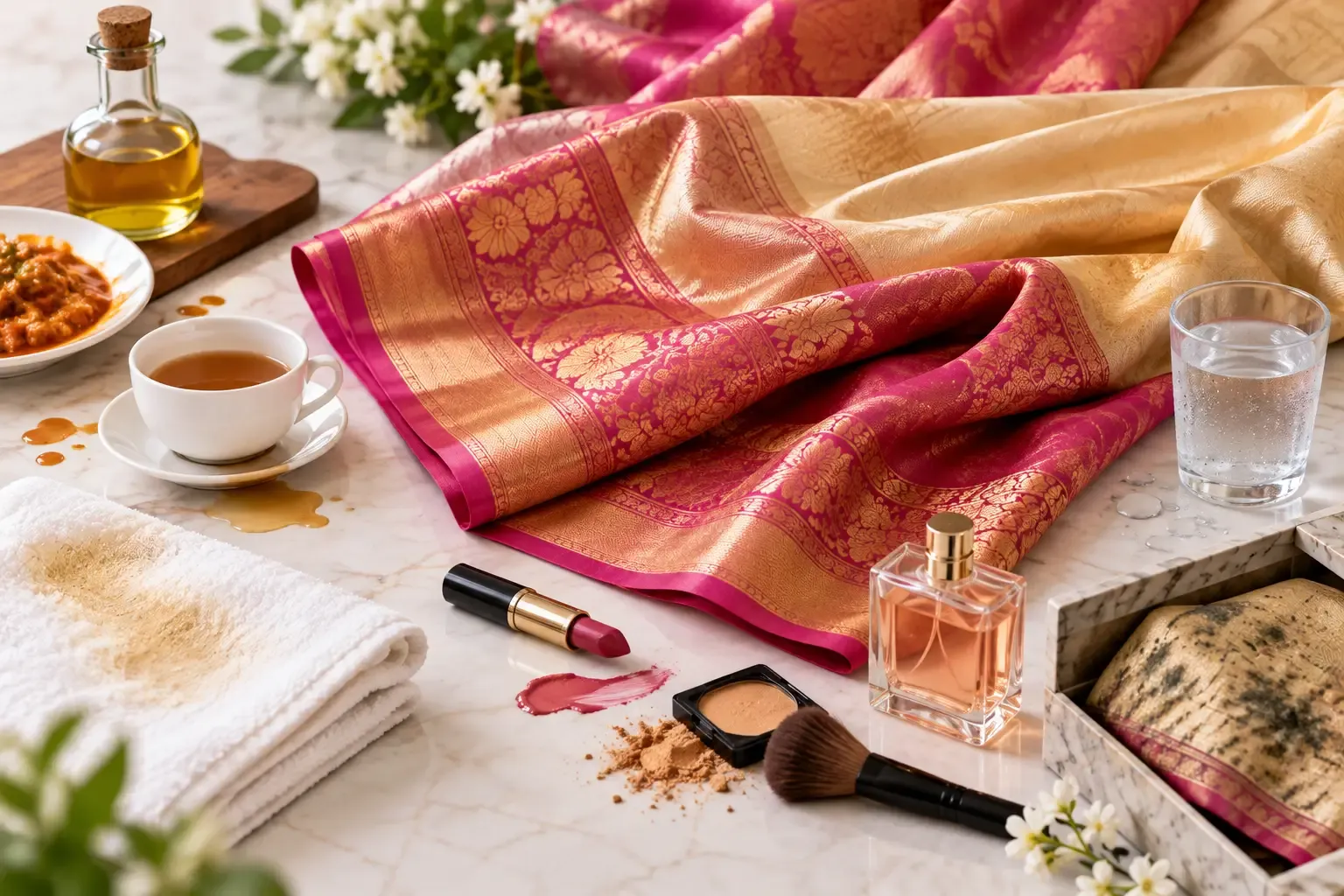
Silk sarees can pick up stains from everyday wear, celebrations, meals and special occasions. Understanding the type of mark can help you decide when professional cleaning may be appropriate.
1. Oil and Grease Stains
Oil and grease stains can be particularly stubborn because they can penetrate into fabric fibres. Cooking oil, oily food and other greasy substances may leave noticeable marks on a silk saree.
The longer an oil stain remains untreated, the more difficult it may become to remove. Heat can also make the problem worse by setting remaining oil into the fabric.
For delicate silk sarees, professional dry cleaning for silk sarees may be a safer choice than experimenting with household stain removers.
2. Food and Beverage Stains
Silk sarees worn at weddings, parties and celebrations can easily come into contact with food or drinks. Tea, coffee, sauces and other food-related spills may leave visible marks.
The type of stain, how long it has remained and the saree's care instructions can all affect the appropriate cleaning approach.
3. Sweat and Body-Oil Stains
Perspiration and body oils can accumulate around areas that receive regular contact with the skin. Over time, these marks may affect the appearance or freshness of the saree.
Because silk is delicate, aggressive washing is not necessarily the best solution. Professional dry cleaning silk sarees can provide a more controlled approach when the care label recommends professional cleaning.
4. Water and Moisture Marks
Water can sometimes leave noticeable marks on silk, particularly when moisture affects the fabric unevenly. Moisture-related marks should not automatically be treated with more water or vigorous rubbing.
If a saree has developed visible water marks, professional assessment can help determine the most suitable cleaning method.
5. Makeup and Cosmetic Stains
Makeup can transfer onto sarees around the neckline, sleeves or areas that come into close contact with the body. Foundation, lipstick and other cosmetics can leave marks that are difficult to deal with using unsuitable household products.
6. Perfume and Cosmetic Residue
Perfume and other cosmetic products can leave residue on delicate fabrics. Repeated exposure may also affect the appearance of the garment over time.
7. Mould or Mildew Stains
Silk sarees stored in damp or poorly ventilated conditions may develop mould or mildew. These marks require particular care because the issue can involve both visible staining and unpleasant odours.
A saree affected by mould or mildew should be assessed professionally rather than subjected to harsh home cleaning.
Is Dry Cleaning Safe for Silk Sarees?
In many cases, dry cleaning for silk sarees can be a suitable cleaning option, particularly when the care label recommends it. However, "dry clean" does not mean that every silk saree should automatically receive the same treatment.
Why the Care Label Matters
The care label provides important information about how the manufacturer expects the garment to be cleaned. Ignoring these instructions can increase the risk of colour fading, shrinkage or damage to delicate materials.
Before cleaning a silk saree, consider:
- The fabric composition
- The care label instructions
- The type and age of the stain
- The saree's colour
- Embroidery, zari and other embellishments
- Whether the saree has previously been cleaned
Choosing a Suitable Cleaning Method
A professional cleaner should consider the saree before deciding on a cleaning process. This is especially important for expensive, delicate or heavily embellished sarees.
At BandBox Laundry in Manchester, professional garment care involves assessing the garment before selecting a suitable cleaning method. This approach is particularly valuable for silk, designer clothing and other delicate garments where incorrect stain treatment can cause permanent damage.
Protecting Silk Colour and Fabric
One of the main concerns with silk sarees is maintaining their original appearance. Suitable professional cleaning can help reduce unnecessary stress on the fabric and support careful silk fabric care.
However, no cleaning process can guarantee that every stain will disappear or that a colour will never change. Results depend on the fabric, dye, stain, age of the mark and cleaning method.
What Are the Risks of Washing a Silk Saree at Home?
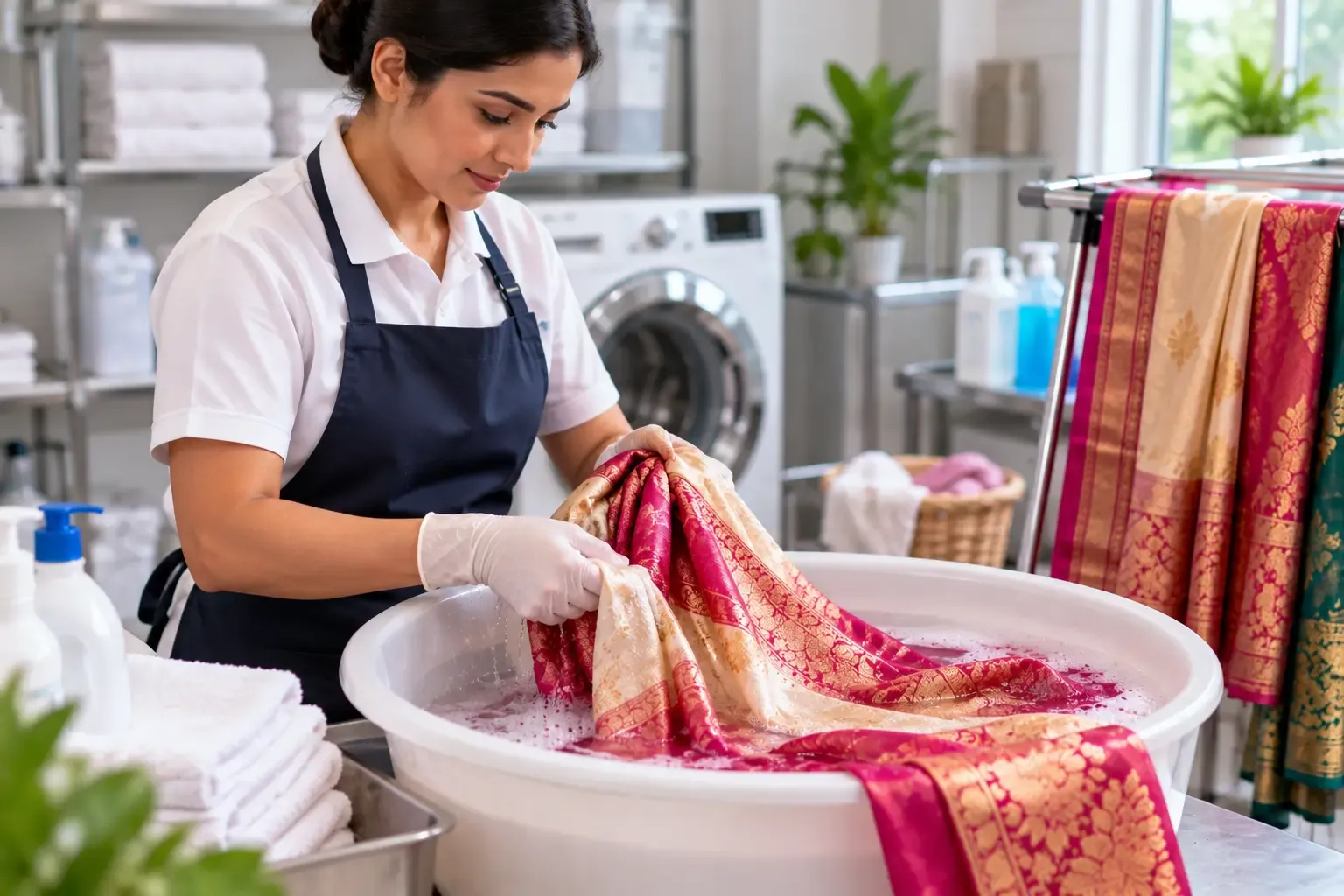
Washing a silk saree at home may seem convenient, but it can create problems when the fabric, dye or embellishments need specialist care. Silk does not always react well to ordinary washing products or rough handling.
Some common risks include:
- Colour bleeding: Certain dyes may release colour when exposed to unsuitable washing conditions.
- Colour fading: Incorrect detergents, water temperature or cleaning methods may affect the original colour.
- Loss of fabric finish: Silk can lose some of its smooth appearance or natural lustre when handled incorrectly.
- Shrinkage or shape changes: Some silk fabrics can react to moisture and unsuitable drying methods.
- Damage to embellishments: Zari, embroidery, beads and decorative details may require separate consideration.
- Stain spreading: Rubbing or applying an unsuitable product can spread a stain instead of removing it.
This is why professional silk saree dry cleaning can be worth considering when the saree is delicate, valuable or affected by a difficult stain.
Which Saree-Care Mistakes Shorten a Garment’s Life?
Good care is not only about removing stains. How you handle a silk saree before and after cleaning can also affect its long-term appearance.
Avoid common mistakes such as:
- Washing the saree without checking its care label.
- Using strong household detergents or stain removers.
- Scrubbing a stained area aggressively.
- Applying heat directly to a stain.
- Leaving the saree damp for a long period.
- Storing a silk saree while it still has moisture or odours.
- Using unsuitable ironing temperatures.
- Ignoring delicate zari, embroidery or other embellishments.
A simple mistake can sometimes cause more damage than the original stain. If you are unsure about the correct cleaning method, professional advice is usually a safer approach for delicate garments.
When Should You Choose Professional Silk Saree Dry Cleaning?
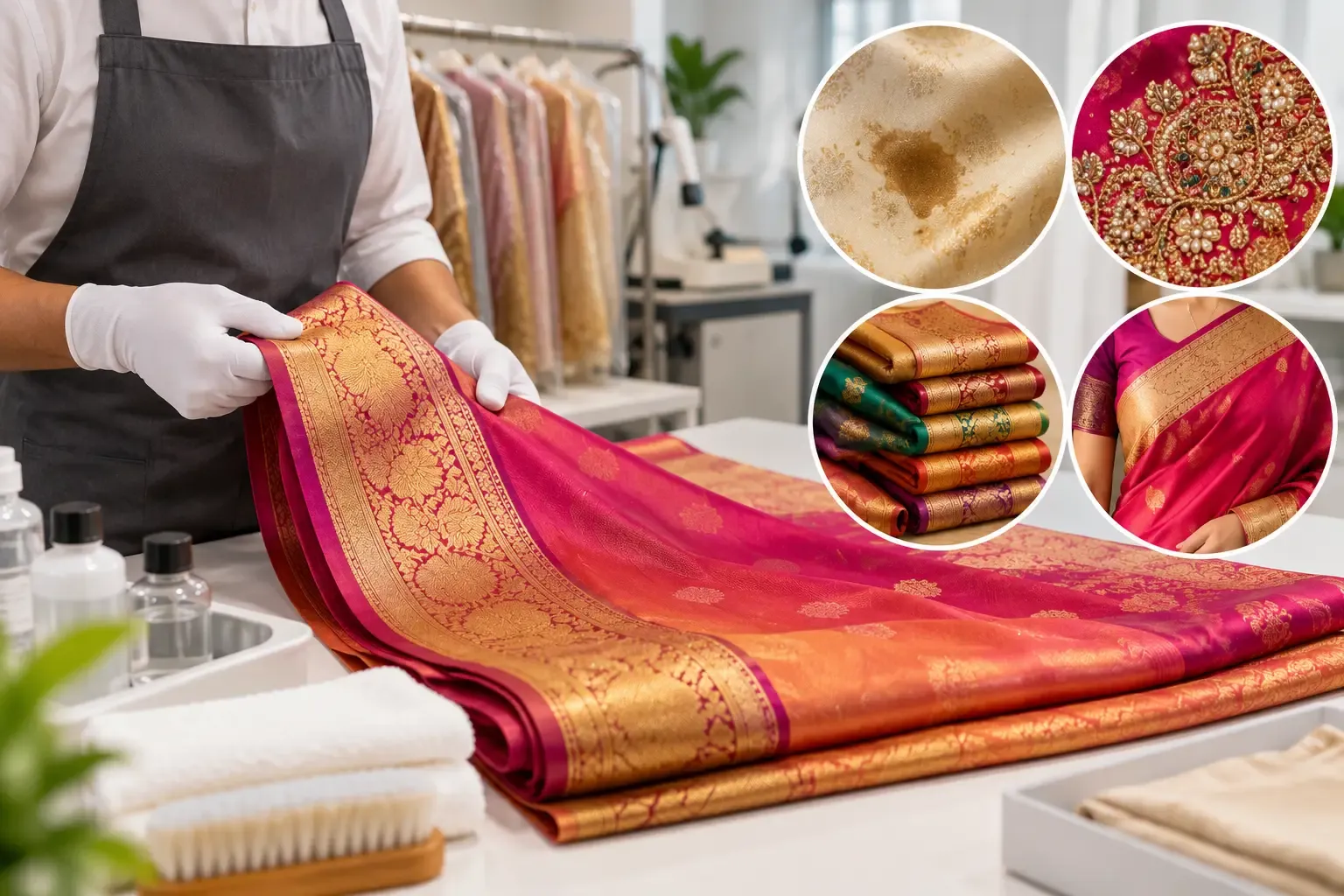
Not every silk saree needs professional cleaning after every occasion. However, some situations make professional dry cleaning for silk sarees a sensible choice.
1. When Your Saree Has Stubborn Stains
If a stain has remained on the saree or you are unsure what caused it, avoid repeatedly experimenting with household products. Older stains can become more difficult to treat, particularly if the garment has already been washed, dried or exposed to heat.
A professional cleaner can assess the stain and fabric before deciding on an appropriate treatment. Cleaning results can vary, so professional treatment does not guarantee complete removal, especially where a stain has permanently affected the fibres or dye.
2. When It Has Zari, Embroidery or Embellishments
Traditional silk sarees can contain more than just silk fabric. Zari work, embroidery, beads, sequins and other decorative elements may require additional care.
A professional silk saree cleaning service can consider these details when assessing the garment. This is particularly important for bridal sarees, designer pieces and heavily embellished traditional wear.
3. When the Saree Is Valuable or Worn for a Special Occasion
A silk saree worn for a wedding, celebration or cultural occasion may have considerable financial or sentimental value. Taking unnecessary risks with home cleaning may not be worthwhile.
Professional cleaning can provide a more controlled approach when you want to prepare a saree for an important event or carefully maintain it afterwards.
4. When You Want to Maintain Colour and Appearance
Regular care can help keep a saree looking its best, but the cleaning method matters. Suitable professional cleaning may help minimise unnecessary stress on the fabric and support silk saree colour protection.
This is particularly useful for brightly coloured silk, older sarees and garments with intricate detailing. However, professional cleaning cannot guarantee that a fabric will never fade, as colour stability depends on the dye, fabric construction, previous exposure and cleaning requirements.
Frequently Asked Questions
Can Dry Cleaning Remove Old Stains from a Silk Saree?
Professional cleaning can help treat some old stains, but it cannot guarantee complete removal. The result depends on the type of stain, how long it has been present, the dye and fabric, and whether previous cleaning attempts have affected it.
Can You Dry and Iron a Silk Saree?
Yes, but silk sarees require careful drying and ironing. Always follow the care label instructions, as excessive heat or incorrect handling can affect the fabric, colour and delicate embellishments. For valuable or heavily embellished sarees, professional cleaning and finishing can be a safer option.
Can Dry Cleaning Remove Oil Stains from Silk?
Professional cleaning may help treat oil and grease stains on silk. Oil-based marks can be difficult to remove through ordinary washing, so the stain and fabric should be assessed before treatment. Avoid rubbing or applying household stain removers without checking the care requirements.
Does Dry Cleaning Cause Silk Sarees to Fade?
Properly selected professional cleaning does not automatically cause silk sarees to fade. However, silk colour can be sensitive to cleaning, and fading may depend on the dye, fabric, previous exposure and cleaning method. Following the care label and using an appropriate cleaning process can help protect the saree's colour and appearance.
Conclusion
A silk saree deserves more careful treatment than an everyday garment, particularly when it has stubborn stains, delicate embroidery, zari work or valuable detailing. Silk saree dry cleaning can be a suitable option when the care label recommends professional cleaning and the garment requires careful stain treatment.
Rather than trying aggressive home methods, consider the fabric, stain and construction of the saree first. Professional dry cleaning can help reduce the risk of unnecessary damage while giving difficult stains the attention they require.
At BandBox Laundry, we offer professional dry cleaning for silk sarees in Manchester, with careful attention to delicate fabrics, colours and embellishments. We also provide free collection and delivery within 48 hours, with same-day service available when required. Choosing the right cleaning service can help keep your silk saree looking its best while making saree care more convenient.
Disclaimer:
The information in this article is provided for general information purposes only. Cleaning results may vary depending on the garment, fabric, stain, and cleaning method used. Always follow the garment's care label and seek professional cleaning for delicate or valuable items. BandBox Laundry accepts no liability for any loss or damage resulting from the use of the information provided.