How to Remove Tough Stains from Children’s Clothes (Food, Mud, Ink, and Grass)

Children love exploring, playing outdoors, enjoying messy meals, and getting creative with paints and pens. However, these everyday activities can leave stubborn marks on their clothes, from grass stains on school trousers to curry stains on T-shirts and ink marks on school uniforms.
Knowing how to remove stains from children’s clothes can help you keep garments looking fresh while protecting their colours and fabric. The key is to treat each stain correctly, choose a suitable cleaning method, and avoid anything that could damage the material.
In this guide, we cover practical kids’ stain removal tips for common food, mud, grass, ink, and crayon stains. You will also find advice on fabric care, mistakes to avoid, and when professional laundry services, such as BandBox Laundry in Manchester, may help with difficult stains.
Why Are Stains on Children’s Clothes So Hard to Remove?
Children’s clothes often collect several types of dirt and stains throughout the day. Some marks come out with ordinary washing, while others need specific treatment before you put the garment in the washing machine.
Active Play, Messy Meals, and Frequent Spills
Outdoor activities can leave grass and mud stains on school uniforms and play clothes. Food spills can also leave oily, coloured, or protein-based marks that become harder to remove if you leave them untreated.
Different stains need different approaches. For example, brushing away dry mud is often more effective than rubbing wet mud into the fabric.
Stains Left Too Long Before Washing
When stains dry, they can become harder to remove because residue settles into the fibres. Busy parents may not notice a mark until laundry day, especially on darker clothing.
For better results:
- Check children's clothes for stains before putting them in the laundry basket.
- Treat visible marks as soon as practical.
- Avoid ironing or tumble-drying stained garments until you have checked that the stain has gone.
Wrong Water Temperature Setting the Stain
Hot water can make certain stains, particularly protein-based marks such as milk and egg, more difficult to remove. However, some other stains respond to different temperatures depending on their composition and the fabric.
Always check the care label and the recommended treatment for the specific stain before washing.
First Steps Before You Treat Any Stain

Before trying any stain treatment for fabric, prepare the garment carefully. The right first steps can reduce the risk of spreading the mark or damaging the material.
Act Quickly and Blot, Don’t Rub
Remove excess food or dirt gently with a spoon or blunt edge. For liquid stains, blot with a clean cloth rather than rubbing the area.
Rubbing can push the stain deeper into the fibres and spread it across a larger area.
Check the Fabric Care Label
Check the label for washing temperature, drying instructions, and any restrictions on cleaning products. Cotton T-shirts may tolerate a different treatment from woollen jumpers or delicate party clothes.
Test a Small Hidden Area First
Before applying a stain remover, test it on an inconspicuous area of the garment. Follow the product instructions and check for colour changes or fabric damage.
Never mix cleaning products, particularly bleach with ammonia-based products or acids, as this can release dangerous fumes. Keep stain removers away from children and follow the safety instructions on the packaging.
How to Remove Food Stains from Kids’ Clothes
Food stains are common on children's clothing, especially after meals, snacks, and school lunches. The best way to remove food stains from kids’ clothes depends on the ingredients and the fabric.
Milk, Curd, and Baby Food Stains
Milk, yoghurt, and baby food can leave protein-based marks that become harder to remove when exposed to high temperatures.
- Gently scrape off excess food without spreading it.
- Rinse the affected area with cool water, following the garment's care instructions.
- Apply a suitable laundry detergent according to its label.
- Wash the garment at the recommended temperature and check the stain before drying.
Avoid starting with hot water, as heat can make protein stains more difficult to remove.
Chocolate, Ice Cream, and Sauce Stains
Chocolate and ice cream may contain both fats and proteins, while tomato-based sauces can leave coloured marks.
- Remove excess food with a spoon.
- Blot the stain gently and avoid rubbing it into the fabric.
- Apply a fabric-appropriate stain treatment according to its instructions.
- Wash the garment as directed on the care label.
Check the stain before tumble-drying or ironing the garment. If the mark remains, repeat a suitable treatment rather than applying heat.
Turmeric and Curry Stains
Turmeric and curry can leave noticeable yellow or orange marks, particularly on white and light-coloured clothing.
- Remove excess curry carefully.
- Rinse the stain with cool water if the care label permits.
- Use a suitable laundry detergent or stain remover, testing it on a hidden area first.
- Wash according to the fabric's care instructions.
Avoid using bleach or strong household cleaning products without checking whether they are suitable for the garment.
How to Remove Mud and Grass Stains
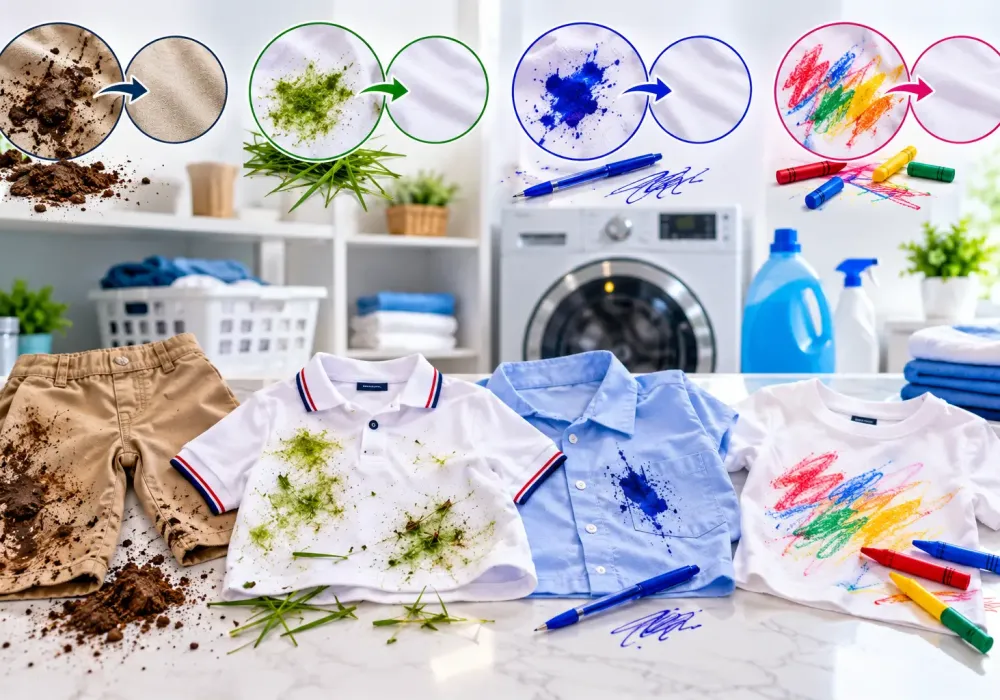
Outdoor play often leaves school trousers, shorts, and T-shirts covered in dirt. With the right approach, you can reduce the risk of spreading these stains during washing.
Let Mud Dry, Then Brush It Off
Wet mud can spread when you rub it, pushing dirt further into the fibres. Allow the mud to dry before gently brushing away the loose soil.
Next:
- Rinse away remaining dirt where the care label permits.
- Apply a suitable laundry detergent to the affected area.
- Wash the garment according to its care instructions.
- Check for remaining marks before drying.
For heavy mud stains, you may need to repeat the treatment.
Treating Grass Stains on School Uniforms and Play Clothes
Grass stains can be difficult to remove because they contain coloured plant compounds and other organic residue.
For effective grass stain removal:
- Remove loose dirt from the garment.
- Apply a suitable stain remover, following its instructions.
- Test the product on a hidden area, especially on coloured school uniforms.
- Wash at the recommended temperature and inspect the stain afterwards.
Avoid scrubbing aggressively, as this may damage the fabric or cause colour fading.
How to Remove Ink, Pen, and Crayon Stains
Ink stain removal requires care because different pens and colouring materials contain different ingredients. Always identify the material where possible before choosing a cleaning product.
Ballpoint and Gel Pen Ink on Uniforms
If you discover ink on a school shirt or school trousers, place a clean, absorbent cloth beneath the stained area if the fabric allows it.
- Blot the mark gently rather than rubbing it.
- Use a stain treatment specifically suitable for the ink and fabric.
- Follow the product instructions and test it on an inconspicuous area first.
- Wash according to the care label and check the result before drying.
Some ink stains may require specialist treatment, particularly if they have dried or spread.
Crayon, Marker, and Colour Stains
Crayon may contain wax, while marker stains vary depending on the type of ink. This means one treatment will not work for every mark.
Remove loose residue carefully and check the garment's care instructions before applying a suitable stain remover. Avoid applying heat until you have checked that the mark has gone, as heat may make some residues harder to remove.
Common Mistakes That Make Stains Permanent
Even when you use a suitable cleaning product, certain mistakes can make stain removal more difficult.
Using Hot Water on Protein Stains
Hot water can set protein-based stains such as milk and egg. Start with cool water where appropriate, then follow the recommended treatment and care label.
Rubbing the Stain Instead of Blotting
Aggressive rubbing can spread the stain and damage fibres. Blot liquids gently and lift solid residue rather than grinding it into the garment.
Putting Stained Clothes in the Dryer
Heat from a tumble dryer can make some remaining stains harder to remove. Inspect the garment after washing and repeat a suitable treatment if necessary.
Mixing Different Stain Remedies Together
Never mix stain removers, bleach, vinegar, ammonia, or other household cleaning products. Some combinations can release toxic gases or cause harmful chemical reactions. Use one suitable product at a time, following its instructions.
Which Stain Removal Method Works for Which Fabric?
The table below provides general guidance for common stains. Always check the garment's care label and the cleaning product instructions before treating it.
- Milk and baby food stains: Blot away excess residue and rinse with cool water where suitable. Avoid starting with hot water, as it can make protein-based stains more difficult to remove.
- Chocolate and ice cream stains: Gently remove excess food and apply a suitable laundry detergent. Avoid rubbing aggressively, as this can push the stain deeper into the fabric.
- Turmeric and curry stains: Remove excess food and use a fabric-safe stain treatment. Avoid unverified bleach treatments, especially on coloured clothing.
- Mud stains: Allow the mud to dry, then brush away loose dirt before washing. Avoid rubbing wet mud into the fabric, as this can spread the stain.
- Grass stains: Apply a suitable stain treatment and wash according to the care label. Avoid harsh scrubbing, particularly on coloured clothes and school uniforms.
- Ink and marker stains: Blot the affected area gently and use a treatment suitable for the type of ink and fabric. Avoid applying heat before checking whether the stain has disappeared.
- Crayon stains: Carefully remove loose residue and choose a suitable treatment for the material. Avoid ironing over the mark, as heat can make some residues more difficult to remove.
When Should You Take Stained Clothes to a Professional Laundry?
Home treatment may not be enough for every stain. Professional cleaning can be worth considering when the garment is delicate, the stain has dried, or repeated washing has not worked.
Old and Set-In Stains
Dried stains can be difficult to remove, especially if someone has already washed or heated the garment. A professional can assess the stain and fabric before deciding on a suitable cleaning method. However, complete removal cannot be guaranteed.
Delicate Fabrics and Children’s Woollens
Woollen jumpers, delicate dresses, and other special-care garments may shrink, lose their shape, or become damaged if washed incorrectly. Follow the care label and seek professional advice when the garment requires specialist cleaning.
White and Light-Coloured School Uniforms
White shirts and light-coloured uniforms can show food, ink, mud, and grass marks clearly. Professional assessment may help identify an appropriate treatment without unnecessarily damaging the fabric.
Why Choose BandBox Laundry for Your Child’s Stained Clothes?

For families managing school uniforms, play clothes, and everyday laundry, professional cleaning can help reduce the time spent dealing with difficult garments.
Deep Stain Treatment with Skin-Safe Products
The appropriate treatment depends on the stain and fabric. If you have concerns about detergent residues or sensitive skin, discuss suitable cleaning products with your laundry provider. Do not assume every product is suitable for every child or garment.
Fabric-Safe Care for Uniforms and Delicate Wear
BandBox Laundry provides laundry and garment-care services in Manchester. Professional assessment can help determine the most appropriate cleaning method for suitable uniforms and delicate garments.
Pickup and Delivery for Busy Parents
BandBox Laundry offers collection and delivery within 48 hours, with same-day service also available. This can be helpful when family schedules leave little time for managing laundry.
Quick Tips to Prevent Stains on Kids’ Clothes
- Use bibs during meals and aprons for messy activities.
- Check school uniforms and play clothes for stains before placing them in the laundry basket.
- Treat stains promptly when practical.
- Keep a suitable stain remover at home and follow its instructions.
- Choose darker or patterned play clothes when appropriate.
- Check garments after washing before tumble-drying or ironing.
Frequently Asked Questions
How do you remove dried stains from children’s clothes?
Gently remove loose residue, check the care label, and apply a suitable stain treatment. Follow the product instructions and repeat the treatment if needed. Some old stains may not come out completely.
What is the safest stain remover for kids’ clothes?
There is no single stain remover that suits every garment or child. Choose a product suitable for the fabric, follow its safety instructions, and keep it out of children's reach. If a child has sensitive skin, consider seeking advice on suitable laundry products.
Can old ink stains be removed from a school uniform?
Some old ink stains respond to specialist treatment, but success depends on the ink, fabric, and previous cleaning attempts. Avoid heat until you have checked whether the stain remains.
Why do stains come back after washing?
Residue may remain in the fibres even when a stain looks less visible while wet. Some marks can become noticeable again as the garment dries. Check the clothing in good light and treat any remaining mark before applying heat.
Final Thoughts: Keep Your Child’s Clothes Clean and Stain-Free
Food, mud, grass, ink, and crayon stains are part of everyday childhood. Acting promptly, choosing the right treatment, and following garment care labels can help you manage many common marks while protecting children's clothing.
For stubborn stains or delicate garments that need extra attention, BandBox Laundry offers professional laundry services in Manchester, with collection and delivery within 48 hours and same-day service available. Contact the team to discuss your garment's cleaning requirements