How to Clean a Dining Tablecloth and Remove Tough Food Stains

Dining tablecloths make a dining area look neat and welcoming, but everyday meals can leave behind food spills, grease, tea marks and stubborn stains. Even when a tablecloth looks clean after washing, some marks may remain in the fabric, particularly if you do not treat them before putting the garment in the washing machine.
Knowing how to clean a dining tablecloth correctly helps you remove everyday dirt, protect the fabric and keep your table linen looking fresh for longer. The right cleaning method depends on the stain, the material and the care instructions.
In this guide, we explain how to tackle common food stains, care for different tablecloth fabrics and recognise when professional tablecloth cleaning may be helpful. If you live in Manchester, BandBox Laundry can also help you explore suitable cleaning options for table linen that needs extra attention.
Why Do Dining Tablecloths Get Dirty So Quickly?
Dining tablecloths come into contact with food, drinks, hands and everyday household dust. Regular use can leave marks that become harder to remove when you leave them untreated.
Food Spills, Grease and Sauce Stains
Meals often leave food residue on dining table linen. Curry, tomato sauce, gravy and oily foods can create noticeable stains, especially on white or light-coloured tablecloths.
Grease can cling to fabric fibres, making ordinary washing less effective if you do not treat the mark properly first.
To manage food stains:
- Remove excess food gently with a spoon.
- Blot the affected area with a clean cloth instead of rubbing it.
- Apply a suitable stain treatment according to its instructions.
- Check the care label before washing the tablecloth.
Acting promptly can make removing food stains from tablecloths easier, although some marks may need specialist attention.
Tea, Coffee, Wine and Juice Marks
Spilled drinks can leave visible marks on dining tablecloths. Tea and coffee may discolour light fabrics, while red wine and dark fruit juices can leave strong coloured stains.
Blot liquid spills as soon as possible with a clean, absorbent cloth. Avoid rubbing the area, as this can spread the stain further into the fibres.
Choose a cleaning treatment suitable for the fabric and stain. Always test the product on a hidden area first, particularly when cleaning coloured or delicate table linen.
Dust, Everyday Handling and Lingering Odours
Even without obvious spills, tablecloths collect dust, crumbs and residue from regular handling. Food particles trapped in folds can also contribute to unpleasant smells if you leave the linen unwashed for too long.
Shake off loose crumbs before washing and inspect the tablecloth after meals. Regular cleaning helps maintain its appearance and prevents dirt from building up between washes.
Is a Quick Wash Enough to Clean a Tablecloth Properly?
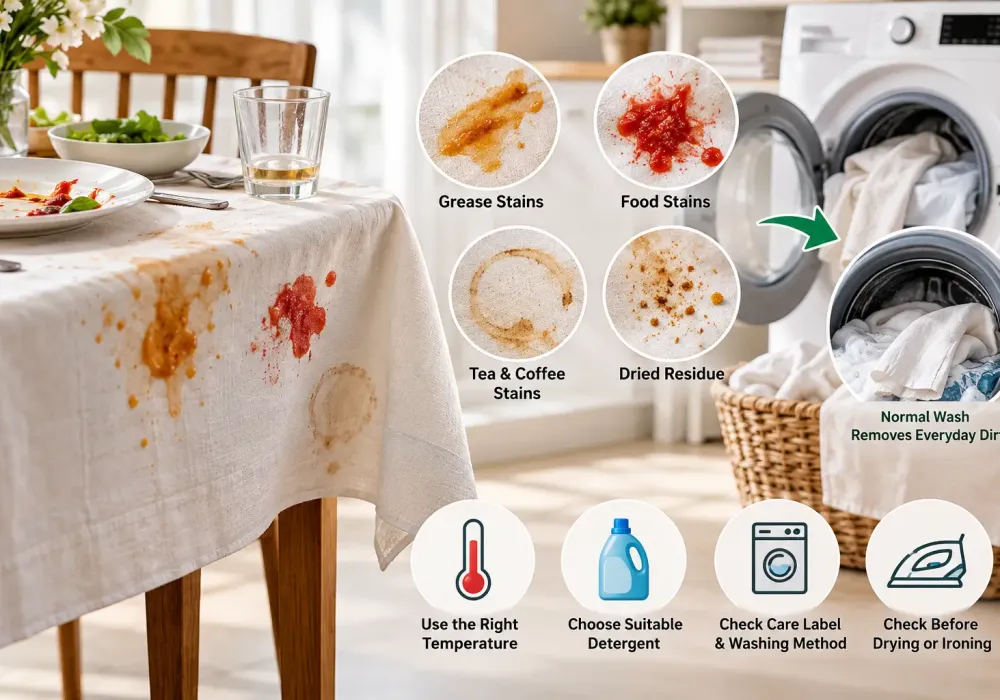
A normal washing cycle can remove everyday dirt from many washable tablecloths. However, a quick wash may not remove every stain, particularly when grease, coloured food or dried residue has settled into the fibres.
Why Some Food and Grease Stains Remain After Washing
Different stains contain different substances. Grease-based marks behave differently from tea, coffee or tomato sauce stains, so one cleaning method may not work for everything.
If a stain remains after washing, avoid immediately applying more heat. Check the care label, choose an appropriate treatment and inspect the mark before drying the tablecloth.
How Incorrect Washing Can Affect Colours and Fibres
Using the wrong washing temperature, detergent or cycle can affect the appearance and condition of table linen.
For example, delicate fabrics may become damaged through excessive agitation, while unsuitable products can affect certain colours or decorative finishes.
Before washing, check:
- The recommended washing temperature.
- Whether the fabric is suitable for machine washing.
- Which detergents and stain treatments are appropriate.
- Whether the tablecloth needs a special drying or ironing method.
These checks are particularly important when cleaning linen tablecloths or table covers with decorative details.
Why Heat Can Make Certain Stains Harder to Remove
Heat can make some stains more difficult to remove, depending on their composition. Protein-based food marks, for example, can become harder to treat when exposed to high temperatures.
Always follow the stain treatment instructions and the garment's care label. If a mark remains after washing, check it before tumble-drying or ironing the tablecloth.
What Happens When You Do Not Clean Tablecloths Properly?
Tablecloths can gradually lose their fresh appearance when stains, dirt and residue remain in the fabric. Choosing suitable cleaning methods helps protect the linen and maintain its appearance.
Stains Become More Difficult to Remove
Food residue, grease and drink stains can become harder to treat as they dry and settle into the fibres. Leaving a stained tablecloth in the laundry basket for several days may make the cleaning process more difficult.
Treat visible stains promptly where possible and wash the tablecloth according to its care instructions.
White Tablecloths Can Develop a Dull Appearance
White tablecloths can look grey or dull when dirt, food residue and unsuitable washing products build up over time. Mixing whites with coloured laundry can also cause unwanted colour transfer.
To maintain white table linen, separate it from coloured garments, use a suitable detergent and follow the recommended washing temperature. Avoid excessive bleach or harsh treatments that may damage the fibres.
Fabric Can Lose Its Fresh Look Through Incorrect Care
Repeated washing with unsuitable products or harsh cycles can affect a tablecloth's texture, colour and finish. Delicate embroidery and decorative details may need extra attention.
Read the care label before cleaning and choose a method that suits the fabric. When a tablecloth has special cleaning requirements or a persistent stain, professional advice may help you avoid unnecessary damage.
How to Remove Common Dining Tablecloth Stains
Different stains need different treatments. Before using a cleaning product, check the tablecloth's care label and test the product on a small, hidden area.
Food and Curry Stains
Curry, tomato sauce and other coloured foods can leave stubborn marks on dining table linen. Some ingredients also contain oils that make stains harder to remove.
To treat food stains:
- Remove excess food carefully with a spoon.
- Blot the stain rather than rubbing it into the fibres.
- Apply a suitable laundry detergent or fabric-safe stain treatment.
- Wash according to the care label and check the result before drying.
For dried curry stains, avoid aggressive scrubbing or applying untested household remedies. Delicate or light-coloured tablecloths may need more careful treatment.
Tea and Coffee Stains
Tea and coffee can leave brown marks on cotton, linen and other tablecloth fabrics. These stains are particularly noticeable on white table linen.
Blot the spill promptly with a clean cloth and use a suitable treatment according to the product instructions. Rinse or wash the fabric as directed by its care label.
If the stain remains after washing, treat it again where appropriate rather than immediately ironing or tumble-drying the tablecloth.
Oil and Grease Stains
Oil from butter, salad dressing, gravy and fried foods can cling to fabric fibres. Ordinary washing may not remove the mark completely if you do not treat it correctly.
Gently lift excess grease with a clean cloth or blunt edge. Apply a detergent or stain treatment suitable for the material, following its instructions, then wash the tablecloth according to the care label.
Avoid using excessive detergent or rubbing the stain harshly, as these approaches may leave residue or damage delicate fibres.
Wine and Fruit Juice Stains
Red wine and brightly coloured fruit juices can leave visible marks, particularly on pale tablecloths.
Blot the liquid immediately using a clean, absorbent cloth. Avoid rubbing, which can spread the stain. Use a suitable fabric-safe treatment and follow the manufacturer's instructions.
Some stains may not disappear completely, especially if they have dried or undergone previous washing. For valuable or delicate table linen, professional assessment may be the safer option.
Why Does Tablecloth Fabric Matter When Cleaning?
The right cleaning method depends on the fabric, its construction and any decorative finishes. Before deciding how to clean a tablecloth, check the care label rather than assuming every material can tolerate the same treatment.
Cotton and Linen Tablecloths
Cotton and linen tablecloths are common choices for everyday dining and special occasions. However, their washing requirements can differ depending on the weave, colour and finish.
- Check the recommended washing temperature.
- Use a suitable detergent and avoid excessive product.
- Treat stains before washing where appropriate.
- Follow the drying and ironing instructions to maintain the fabric's appearance.
When cleaning linen tablecloths, take particular care with delicate finishes and embroidered sections.
Polyester and Blended Fabrics
Polyester and blended tablecloths are often used for everyday dining because they can be practical to maintain. However, their heat tolerance and stain-treatment requirements depend on the specific fabric.
Use the recommended washing cycle and avoid excessive heat unless the care label permits it. Check for remaining stains before ironing or tumble-drying.
Embroidered and Delicate Table Linen
Embroidered tablecloths, decorative centre table covers and delicate table linen may need more careful handling than ordinary cotton tablecloths.
Strong agitation, harsh stain removers or unsuitable ironing temperatures can damage threads and decorative details. If the care label recommends specialist cleaning, follow that guidance.
For valuable or sentimental table linen, Professional laundry services like BandBox Laundry in Manchester can help you choose a suitable cleaning method for delicate tablecloths. Professional tablecloth cleaning can help remove stubborn stains while protecting the fabric's colour, texture and appearance. The right cleaning approach helps keep your dining table linen looking fresh and well cared for.
When Should You Choose Professional Tablecloth Cleaning?
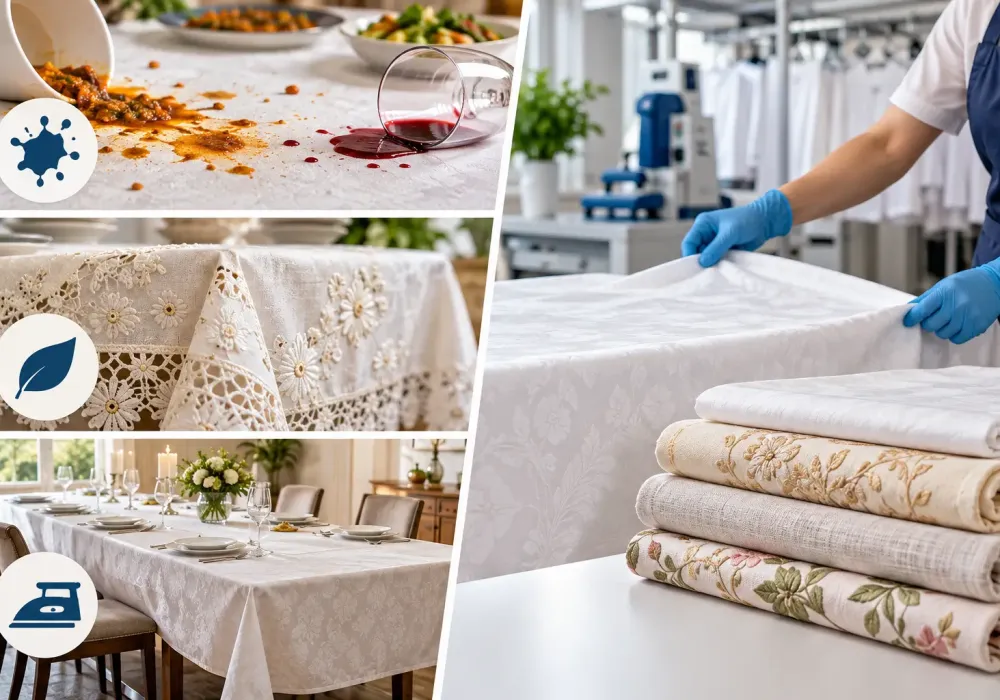
Home washing works well for many everyday tablecloths, but some situations call for additional care. A professional service may be worth considering when a stain persists or the fabric needs a specialised cleaning approach.
Stubborn or Set-In Food Stains
Old curry marks, dried grease and persistent drink stains can be difficult to remove with routine washing. Professional assessment can help identify a suitable treatment based on the stain and fabric.
However, stain removal is not always guaranteed. Results depend on the type of mark, how long it has been present and whether previous cleaning has affected it.
Delicate Fabrics and Decorative Table Covers
Embroidered tablecloths, delicate linen and decorative centre table covers may require more careful handling than standard washable fabrics.
If you are unsure whether a table cover can be machine-washed, check the care label and seek advice before attempting a treatment that could damage it.
Large Tablecloths That Need Careful Finishing
Large dining tablecloths can be awkward to wash, dry and iron at home. Professional table linen cleaning may be convenient when you need to prepare tablecloths for family gatherings, celebrations or regular household use.
Choose a service that can confirm whether your particular fabric and item are suitable for its cleaning process.
Why Choose BandBox Laundry for Tablecloth Cleaning in Manchester?
Keeping table linen clean takes time, particularly when you need to deal with food stains, large fabrics or delicate decorative covers. BandBox Laundry provides laundry and garment-care services in Manchester and can help you discuss suitable cleaning options for your table linen.
Care for Suitable Table Linen and Fabric Types
Different tablecloths require different cleaning methods. When contacting BandBox Laundry, explain the material, the type of stain and any care instructions so the team can advise whether the item is suitable for its service.
This is especially helpful for tablecloths with persistent stains or delicate finishes.
Convenient Laundry Services for Busy Households
If you have a busy household, finding time to wash and finish table linen can be difficult. Using a laundry service may help you manage these tasks alongside your everyday responsibilities.
Whether you are preparing for a family meal or refreshing table linen after an event, discuss your requirements with BandBox Laundry before arranging the service.
Collection and Delivery Options
BandBox Laundry offers collection and delivery within 48 hours, with same-day service also available. These options can make arranging laundry care more convenient for households in Manchester.
Contact the team to confirm whether your tablecloth or centre table cover is suitable for cleaning and to check the available service options.
Simple Tips to Keep Your Tablecloths Looking Fresh
A few simple habits can help maintain your table linen between washes:
- Remove food residue promptly: Lift excess food before it dries into the fabric.
- Blot liquid spills: Use a clean cloth rather than rubbing the affected area.
- Check the care label: Follow the recommended washing temperature and cleaning instructions.
- Separate heavily stained linen: Keep stained tablecloths separate from other laundry when appropriate to reduce the risk of transferring dirt.
- Store tablecloths when completely dry: Make sure the fabric is fully dry before folding and storing it.
These habits can help reduce stain build-up and keep your dining tablecloths looking presentable for longer.
Frequently Asked Questions
How often should you wash a dining tablecloth?
Wash a dining tablecloth whenever it becomes visibly dirty or develops food stains or unpleasant smells. Tablecloths used for everyday meals may need washing more frequently than decorative covers that receive little use.
How do you remove old food stains from a tablecloth?
Check the fabric's care label and use a suitable stain treatment. Follow the product instructions and inspect the tablecloth after washing. Some old stains may remain, particularly if heat has already set them into the fibres.
Can linen tablecloths be machine-washed?
Some linen tablecloths are machine-washable, but others require special care. Always follow the manufacturer's instructions, as the weave, finish and decorative details can affect the recommended cleaning method.
How do you keep white tablecloths looking bright?
Wash white tablecloths separately from coloured laundry, use a suitable detergent and treat stains promptly. Avoid excessive bleach or harsh cleaning products, which may damage some fabrics.
Is professional cleaning suitable for embroidered tablecloths?
Professional cleaning may be suitable, depending on the fabric, embroidery and care instructions. Ask the cleaning provider to assess the item before treatment, especially if it is valuable or delicate.
Final Thoughts: Give Your Tablecloths the Care They Deserve
Dining tablecloths can collect food spills, grease, tea marks and everyday dirt, but the right cleaning routine helps protect their appearance and condition. Treat stains promptly, check fabric care labels and avoid using unsuitable cleaning products or excessive heat.
When stubborn stains, delicate materials or large tablecloths make home washing difficult, professional cleaning may be a practical option.
If you need tablecloth cleaning in Manchester, contact BandBox Laundry to discuss your dining table linen or centre table cover and find out which cleaning options are available for your item.
Disclaimer:
The information in this article is provided for general information purposes only. Cleaning results may vary depending on the garment, fabric, stain, and cleaning method used. Always follow the garment's care label and seek professional cleaning for delicate or valuable items. BandBox Laundry accepts no liability for any loss or damage resulting from the use of the information provided.