How to Remove Tough Stains and Odours from Work Aprons
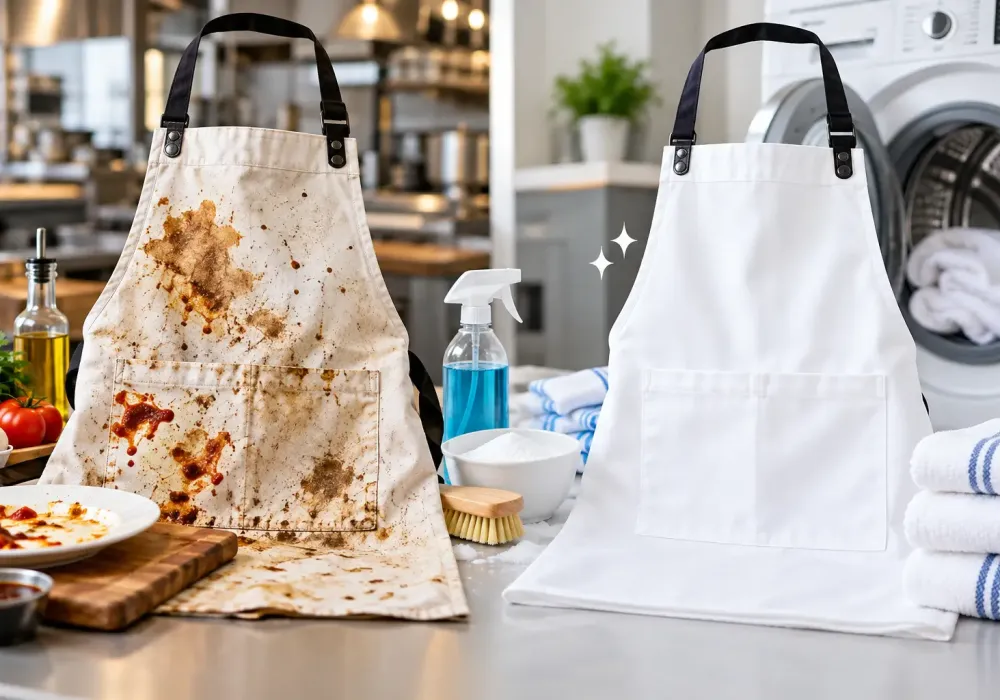
Work aprons can become dirty quickly, particularly in kitchens, restaurants, cafés, catering businesses and other workplaces. Food splashes, grease, oil, sweat and everyday dirt can build up on the fabric during regular use.
While a normal wash may remove light dirt, tough apron stains and lingering odours can sometimes remain after washing. The right cleaning approach depends on the fabric, type of stain and care instructions.
In this guide, we explain how to deal with common work apron cleaning problems, what can damage aprons during washing and when professional apron cleaning may be a better option.
Why Do Work Aprons Get So Dirty?
Work aprons protect clothing from spills and workplace mess, so they naturally collect dirt during everyday use.
Food and Cooking Stains
Food preparation can leave sauces, drinks, spices and other food residues on an apron. Fresh stains are generally easier to deal with than stains that remain on the fabric for a long time.
Common food-related stains include:
- Sauce and gravy
- Coffee and tea
- Food oils
- Drink spills
- Coloured ingredients
Quickly dealing with a fresh stain can help prevent it from becoming more difficult to treat.
Grease and Oil Build-Up
Grease and oil are common problems for kitchen and catering aprons. Cooking oils can penetrate fabric fibres and leave noticeable marks.
Repeated exposure can create a build-up that ordinary washing may not completely remove. If an apron continues to show greasy patches after washing, professional apron cleaning may be worth considering.
Sweat and Body Oils
Aprons worn for long working hours can also collect sweat and body oils, particularly around the neck and areas that remain close to the body.
This can contribute to unpleasant odours and make frequently used workwear require more regular cleaning.
Dust and Everyday Workplace Dirt
Aprons can collect dust, dirt and other particles throughout the working day. This can be particularly noticeable in busy kitchens, workshops, cafés and other working environments.
Regular workwear cleaning helps keep aprons looking cleaner and fresher between uses.
Why Do Aprons Still Smell After Washing?
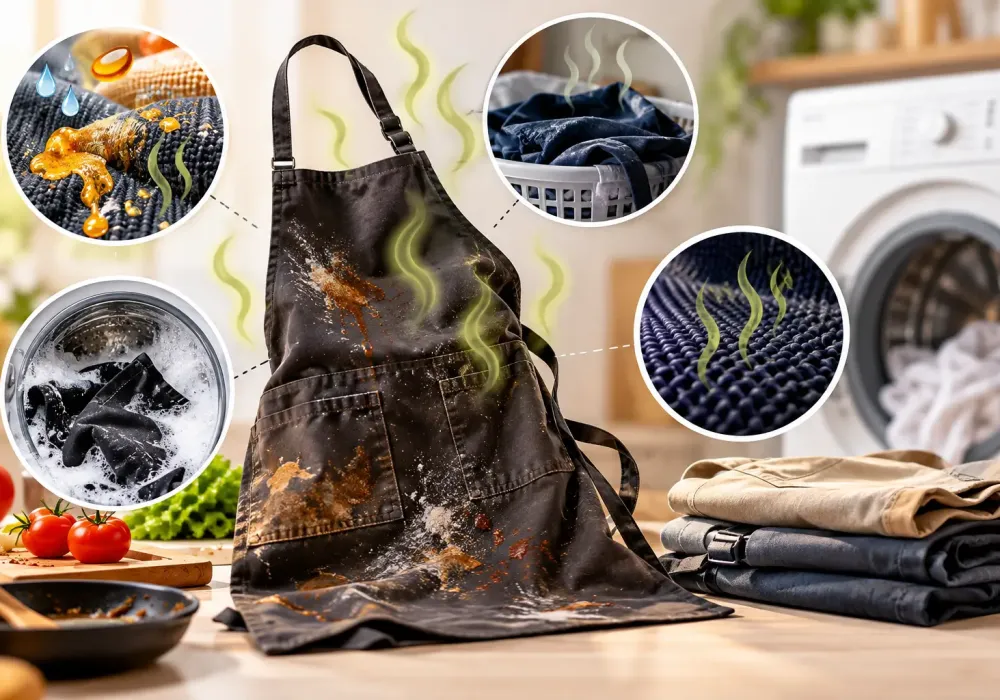
A clean-looking apron can sometimes still have an unpleasant smell. This does not always mean the washing process has failed. Odours can remain when sweat, food residue or other substances stay within the fabric.
Sweat and Food Odours Stay in the Fabric
Sweat, body oils and food smells can become trapped within fabric fibres. If the apron receives heavy use, these residues can accumulate over time.
Regular apron washing can help, but persistent odours may require more suitable cleaning treatment.
Damp Aprons Can Develop Unpleasant Smells
Leaving a damp apron in a laundry basket or closed bag can encourage unpleasant smells. After use, allow suitable washable aprons to dry before placing them with other laundry if you cannot wash them immediately.
Repeated Washing May Not Remove Deep Odours
If an apron still smells after several suitable washes, repeatedly washing it may not solve the underlying problem. Excessive washing can also place additional wear on the fabric.
At this stage, professional garment cleaning may provide a more suitable approach.
Synthetic Fabrics Can Hold Onto Odours
Some synthetic fabrics can retain sweat and body odours more readily than other materials. This can be particularly noticeable with workwear that experiences frequent use.
Always follow the care label and choose a cleaning method suitable for the specific apron fabric.
How Can You Remove Tough Stains from Work Aprons?
The best approach depends on the type of stain and the fabric. Avoid assuming that one stain-removal method works for every apron.
Deal With Fresh Stains Quickly
Fresh food, drink and grease marks are often easier to treat before they dry and become more firmly attached to the fabric.
If you notice a spill, check the care label and deal with it as soon as practical.
Treat Grease and Oil Marks Carefully
Grease stains can be particularly difficult because oil can penetrate the fabric. Avoid using an unsuitable product simply because the stain looks stubborn.
For heavily soiled work aprons, professional stain treatment can be a safer option, particularly when repeated home treatment has not worked.
Remove Food and Drink Stains
Food and drink stains vary considerably. Coffee, tea, sauces and coloured foods may require different treatment.
Before using a stain remover, consider:
- The apron fabric
- The colour of the apron
- The age of the stain
- The care label instructions
Avoid Rubbing Stains Too Aggressively
Hard rubbing can damage fabric fibres or spread a stain across a larger area. Gentle handling is usually preferable, especially with delicate or coloured workwear.
Check the Care Label Before Treatment
Always check the care label before washing or treating an apron. It can tell you whether the garment is suitable for machine washing, specific temperatures or professional cleaning.
What Can Damage Work Aprons During Washing?
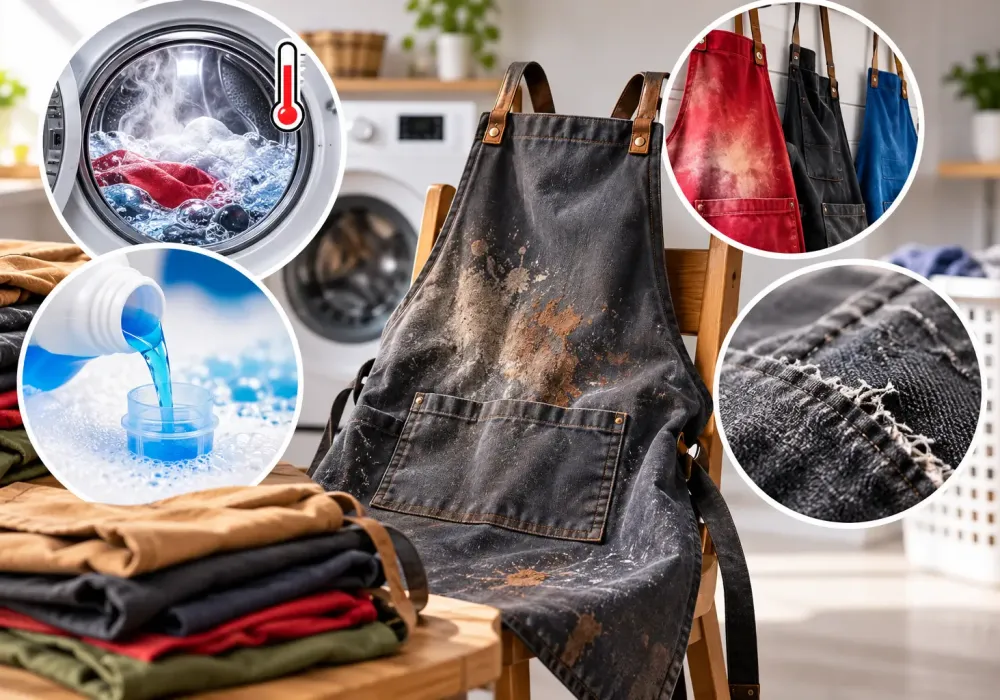
Washing helps keep work aprons clean, but the wrong cleaning routine can affect the fabric, colour and overall appearance. Understanding common washing mistakes can help you maintain your workwear for longer.
Excessive Heat Can Affect the Fabric
Hot water or excessive drying heat can affect some apron fabrics, particularly synthetic materials and blended fabrics. High temperatures may also contribute to shrinkage or changes in shape.
Always check the care label and use the recommended temperature for the garment.
Too Much Detergent Can Leave Residue
Using more detergent does not always make an apron cleaner. Excess detergent can remain on the fabric and may affect its feel or freshness.
Use the recommended amount for the size and condition of the laundry load.
Incorrect Washing Can Affect Colours
Strong cleaning products, unsuitable temperatures or incorrect washing methods can affect coloured aprons. Bright or dark workwear may require more careful fabric care to help maintain its appearance.
Sort suitable colours and follow the garment's washing instructions.
Harsh Treatment Can Weaken Fabric
Repeated aggressive washing, excessive rubbing or unsuitable stain treatments can place additional stress on fabric fibres.
If an apron has a stubborn stain, avoid repeatedly using strong products without checking whether they are suitable for the material.
How Often Should Work Aprons Be Washed?
There is no single washing schedule for every apron. The right frequency depends on the type of work, amount of contact with food or grease and how heavily the apron becomes soiled.
Wash Aprons After Heavy Use
If an apron becomes heavily covered in food, grease, oil or other workplace residue, wash it before using it again.
Regular cleaning helps prevent stains and odours from building up.
Consider the Type of Work
A chef or catering apron may require more frequent cleaning than an apron used for lighter tasks.
Consider:
- How much the apron gets soiled
- Whether it comes into contact with food or grease
- How long it is worn
- Whether it becomes damp or sweaty
Give Heavily Soiled Aprons Extra Care
Heavily soiled workwear may need more attention than an apron with light everyday dirt. If normal washing does not remove the marks, consider professional workwear cleaning rather than repeatedly using stronger household products.
Do Not Reuse Heavily Soiled Aprons
A heavily stained or sweaty apron should not simply be put aside and worn again. Regular cleaning supports better workwear hygiene and helps prevent dirt and odours from becoming more difficult to manage.
When Is Professional Apron Cleaning a Better Choice?
Home washing can work well for many washable aprons, but professional cleaning becomes useful when stains, odours or laundry volumes become difficult to manage.
When Grease and Oil Stains Are Difficult to Remove
Kitchen and catering aprons can develop stubborn grease and oil marks. If suitable home washing has not removed them, professional stain treatment may provide a better option.
Results depend on the fabric, stain and how long the mark has remained on the apron, so complete removal cannot always be guaranteed.
When Aprons Still Smell After Washing
If an apron continues to smell after suitable washing, odour may remain within the fabric because of sweat, food residue or repeated use.
Professional cleaning can provide an alternative when normal laundry has not solved the problem.
When You Have a Large Number of Aprons
Restaurants, cafés, catering businesses and other workplaces may need to clean several aprons regularly. Managing a large amount of workwear at home or on-site can take considerable time.
A professional apron washing service can make regular laundry more manageable.
When You Do Not Have Time for Laundry
Busy working schedules can make regular workwear washing difficult. Professional laundry services can take care of suitable garments while giving you more time to focus on work and other responsibilities.
How Can Professional Laundry Care Help With Work Aprons?
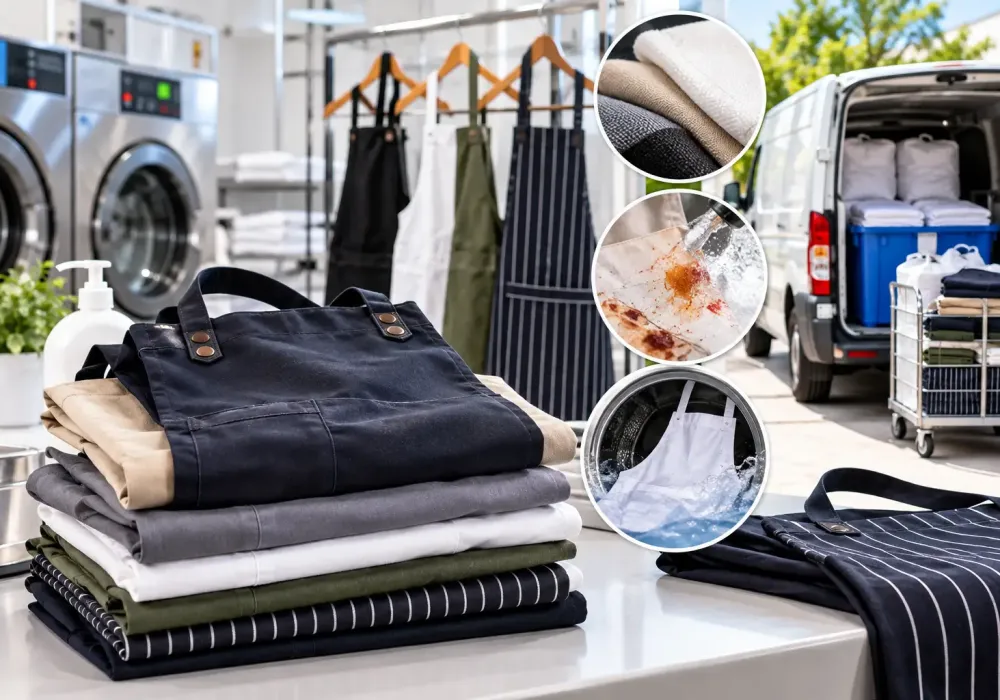
Professional laundry care can be particularly useful for businesses and individuals who regularly deal with stained, heavily used or high-volume workwear.
Care for Different Apron Fabrics
Aprons can be made from cotton, polyester, blends and other materials. Each fabric can have different care requirements.
At BandBox Laundry, we consider the garment, fabric and care instructions when providing suitable laundry and garment cleaning services.
Professional Stain Treatment
Food, grease and oil stains can require careful treatment. Professional cleaning allows the condition of the apron and type of stain to be considered before selecting a suitable cleaning method.
Careful Cleaning for Regular Workwear
Regularly used aprons need consistent cleaning to help maintain their appearance and freshness. Professional laundry care can be useful for customers who have multiple work aprons or other workwear to manage.
Convenient Collection and Delivery
BandBox Laundry provides professional laundry services in Manchester, with free collection and delivery within 48 hours and same-day service available.
This can make regular apron and workwear cleaning more convenient for busy households and businesses.
Frequently Asked Questions About Apron Washing
How Do You Remove Grease from a Work Apron?
First, check the care label and identify the fabric. Fresh grease may be easier to treat than an older stain. Avoid aggressive rubbing or unsuitable products. For stubborn grease marks, professional stain treatment may be a better option.
How Do You Remove Food Stains from an Apron?
The treatment depends on the type of food stain and fabric. Deal with fresh stains promptly where the care label allows and avoid using strong products without checking their suitability.
Why Does My Apron Still Smell After Washing?
Sweat, body oils, food residue and moisture can contribute to lingering odours. Synthetic fabrics may also retain smells. If suitable washing does not improve the odour, professional cleaning may help.
How Often Should Work Aprons Be Washed?
Wash an apron after heavy use or whenever it becomes noticeably dirty, sweaty or stained. Food service and kitchen aprons may need particularly frequent cleaning because of grease and food exposure.
Can Work Aprons Be Washed in a Washing Machine?
Many washable aprons can be machine washed, but you should always check the care label first. The correct temperature and washing cycle depend on the fabric and garment construction.
What Is the Best Way to Clean a Heavily Soiled Apron?
Check the care instructions first and avoid aggressive treatment. If normal washing does not remove stubborn food, grease or oil stains, professional workwear cleaning can be considered.
Can Professional Laundry Remove Tough Apron Stains?
Professional laundry cleaning may reduce or remove some tough stains, but results depend on the fabric, type of stain and how long it has been present. A professional cleaner can assess the garment before choosing a suitable cleaning approach.
Conclusion
Work aprons can quickly collect food stains, grease, oil, sweat, odours and everyday workplace dirt. Cleaning them regularly can help maintain their appearance and keep them fresh for use.
The right cleaning method depends on the apron fabric, care label and type of stain. Avoid excessive heat, harsh treatment and unsuitable cleaning products, particularly when dealing with delicate or coloured workwear.
If regular home washing is not enough, professional apron cleaning and workwear laundry can provide a more convenient option. BandBox Laundry provides professional laundry and garment cleaning services in Manchester, with free collection and delivery within 48 hours and same-day service available.